The Students: What Keeps Them Going?

This post is written by my colleague Laura Whitcombe. Laura has been a member of the English Department at McCutcheon High School since 1994. Her specialty is speech, and in addition to sponsoring the award-winning Speech Team, she teaches the required sophomore speech class, the Ivy Tech Dual Credit course for juniors and seniors, and the Vincennes Early College Advanced Speech for sophomores. Her students’ answers to a question she asked them this week should give us hope, reassurance, and confidence that they’re going to come out all right at the other end of this remote learning experience. 

What is going on inside their heads? The minds of teenagers remain a mystery, but even more so when we cannot be with them in person daily. 

I read the posts written by education journalists and those who want to hand out advice. Just give feedback. Drop grades completely. The kids are traumatized. They are not the same kids as before we sheltered in place. But I don’t know… We aren’t in the Upside Down world of Stranger Things. We are just at home on our laptops.

On Mondays, my speech classes have virtual class meetings. None of us has ever done this before, so it is an evolution. At first, there were faces. Now there are avatars. I have asked a few what they are. But some I just leave alone. There are die-hard kids who always attend. There are hit-and-miss kids who sometimes show up. And there are kids whom I said goodbye to in my classroom and who never showed up online.

Most of my students are with me. More than half. Is that good? My academic classes have about 90% participation in meetings and assignments. My regular mixed-ability classes have between 60 and 70% participation. Some come for the meetings but don’t do the work. Some do the work but randomly attend the virtual sessions. I think that means that they feel good about the resources I shared. My videos, slideshows, document templates, examples, and calendars are providing students with what they need to do the projects. 

But I don’t know for sure. 

I have been wondering what inspired my students to keep working, so Monday I started the class by asking a question. 

“What is keeping you going?  What is motivating you to keep going to school?” 

It was nice to call on each student individually by name. It was just like an attendance question in the classroom. It was nice to give attention to each student. In my classroom this is my habit and consistency is comforting.

I was surprised by the normality of their answers. Grades. Grades still matter. From academic seniors to special education sophomores, most agreed.

  • They still want to try to do what they can do.
  • They want to do their best.
  • They are still thinking of the future. 
  • Some mentioned college.
  • They see a need to learn and have these skills for college.
  • They still need to earn their scholarships.
  • They have goals and are worried about the same consequences as before the shelter-in-place.
  • They said that they have self-discipline, and this is what they do: they get organized, build a schedule, and get things done.
  • Some said that they finally developed or had to develop this discipline. 
  • They were proud that they have been able to make this remote learning work even if they did not like it.

I admire these students who stay motivated. I admire that they are still with us. Thinking back on my own teenage years, I feel like I would have flaked out and dropped out. My mom was a nurse and I would have been unsupervised and left to my own devices. Maybe. Maybe if my peers were like the students in my classes and kept focused, then I would not have wanted to be left out or left behind.

Other students added these comments:

  • “What else am I going to do?”
  • “This is easy on my own schedule.”
  • “I am more relaxed because I can go at my own pace.”
  • “There is lots of time for me to do my hobbies.” They listed painting, embroidery, hoops in the barn, raising animals, working out, and of course, video games and sleep.
  • They showed me new turkeys, chickens, cats, dogs, and a couple of little brothers. They said that having the comforts of home was comfortable and comforting. 
  • Those with parents also working from home described an easy routine where everyone in the house goes to their own spots in the house to work online, then come together in the evening. 

I am impressed by their natural ability to adapt. They have been in school for 10-11-12 years. They know what to do. Teachers have led them through their coursework before and are leading them from afar now. They are not suddenly alien-beings because they are not in seats in our rooms. We, students and teachers, have the same values we did before. We value sticking with challenges and overcoming obstacles. We always have and students are with us.

Of course, I worry about the students who disappeared, but right now I am here for those who want to learn. I will be there for the others when they come back when we are together again, however that happens.

I am so happy for my students. They seem fine. Fine. That is good. And being good might be good enough. For now.

Laura is a graduate of IU-Bloomington and received her Masters in Curriculum and Instruction at Purdue University.  She and I led an educational exchange program between McCutcheon students and students in Pskov, Russia, in 2004. 

#Red4Ed

Third Quarter Doldrums

Around the Equator, there’s a 10-degree band where sailors take warning: the winds don’t blow and ships can’t sail, sometimes for weeks. Time passes slowly, cabin fever sets in, and at the same time, weather patterns can shift unpredictably.

The region called the Doldrums sounds remarkably like the third quarter, the hardest part of the year. Teachers often feel like they’re slogging their way to Spring Break.

  • There’s so much curriculum left to cover
  • We’re worried about kids who aren’t working hard enough
  • We worry about kids who have other challenges or scary life situations
  • We’re so tired, we need some sun, and stress reigns
  • There doesn’t seem to be light at the end of the tunnel

This year is so different. But in conversations I have had and meetings I have attended this past week, the mood felt like the 3rd Quarter Doldrums.

  • Concerns about curriculum. We’ve got a grip now on the technology, but we’re still juggling content: How much is too much? How deep should we go?  When is the advice to simplify, too simple?
  • Kids are behind. Will they be ready for the next level up? How do we determine “effort?” How can we document participation? How in the world can we figure out grades and be fair?
  • We still haven’t connected with some of our kids. Do they have connectivity? Are they still in town? Are they alone? Are they safe?
  • The pace is different, but it’s exhausting, still. Prepping online lessons takes twice as long as we’re used to. Many of us have small children and we’re suddenly teachers for them, too.
  • When we will reach the end? Have we done it right? What have we learned? What if this is a new reality?

The doldrums. A lot of us are there. Not everybody, but enough of us that I’ve noticed.

In my district, this was Week 5 (I’m counting Faux Spring Break and Spring Break as at least one week because most of us started working on eLearning then).  So we have three weeks to go. Hey! That means we’re in the 3rd quarter! That makes sense, then, why we’re in the psychological doldrums.

So how are we going to get through to the end? Not to be a Pollyanna about this, but here are some ideas for making it through to the end.

  1. Just as our students thrive on talking to us and to each other, we need community, too. I didn’t realize it as acutely as I do now until I saw a colleague on a walk at Celery Bog one afternoon. I nearly burst into tears. The best I could do was outstretched arms from a six-foot distance. So if you haven’t already, set up a Google Meet with your best buddy colleagues. I know that meeting with individual teachers, the Principals’ Meets, and the Literacy Team at my high school has helped me tremendously to feel connected
  2. It’s not too late to set goals for the few weeks ahead.
    • Books to read
    • Films to watch
    • Projects to complete
    • An exercise regime to follow
    • More closets and drawers to clean
  3. Try out a new technology. Your students—and you—know you’ve mastered what you’re doing already. Now try one new thing. No one will be impatient. They’ll be supportive and the kids will enjoy the variety.
  4. Go outside every day. Even if it’s raining. Just stand under a tree and breathe.
  5. And look for the humor in all this:
  • So many memes now about dogs exhausted from walking
  • Sanitation workers not being able to pick up all the discards from people cleaning up their homes and cleaning out their garages
  • The funny things your kids say
  • Your strange outfits for Google Meets (i.e., the pajamas on the bottom)
  • The fact that everyone in America needs a haircut

Three weeks to go! You’ve got this!  The wind will blow and you’ll be out of the doldrums before you know it!

#Red4Ed

Halfway There!

We’re halfway from the day we left for Faux Spring Break to the last school day of the year: May 15. The first thing I want to do in this post is to express my admiration for all the teachers I know.  This post is a shout-out to you in the form of a quick tour of some of the things I’ve seen during the past two weeks as I’ve visited your living rooms and kitchen tables or communicated by email, Facebook, phone, and Google Meet. And I know this isn’t the half of it. 

You’ve become technologically creative, utilizing aspects of Canvas many of us have never considered before—Discussions, for example.  Many of you have put up choice boards on Padlet, used Flipgrid for student presentations, even created Google Slideshows that capture your instruction all the way to the end—all the links are embedded; everything is in one place.

Kristin Lin, a Band teacher at MHS, for example, assigned YouTube videos to her students to teach them the language of orchestral conducting. I “sat in” on the lesson and learned that being a symphony director is a whole lot harder than it looks! Try this and see if you can do it! 

Kyle Harris, the 7th grade World History teacher at BGM, created a Padlet for his students to post art from Hudson School of Landscape Painting of the 19th Century. How beautiful is this spread?  Other teachers are using Padlet as a vehicle for organizing the students’ lessons throughout the week. Here’s MHS biology teacher Abi Bymaster’s Biology Padlet.

A teacher in the FACS national Facebook group created a choice board using  a different vehicle: Goggle Docs. MHS teachers Laura Cole and Laila Wilson added to it. Check out this impressive and comprehensive Google Doc choice board that blends practical ideas with creative opportunities. My personal favorite: Clean the Refrigerator!  

Most teachers are using Google Meet frequently and effectively, but sometimes an asynchronous meeting is better. As an alternative to Google Meet, Julie Riley uses Flipgrid with her 7th Grade English classes at WRM. Here’s a link to Honors English 7. If you have never used Flipgrid, this is a good chance to see it in action.

Some of you have created timely lessons out of this health crisis and period of confinement, engaging your students completely:

  • Dawn Grinnage, an English teacher at WMS, had her students, who are reading Anne Frank’s diary, keep journals of their own confinement. Read Sue Scott’s article about this thought-provoking project. 
  • Tasha Ploss’s Health Sciences classes at MHS are learning about pandemics and relating to an earlier read—Hot Zone
  • Jake McIntyre and Scott Royer, who teach social studies at MHS, are directing students to “current events” activities centered around Covid-19 because the subject is and will be a big part of American History. “They’ll be telling their grandchildren about this!”

There have been inspired ways of reaching out and keeping our kids connected

  • Suzi Ryan, A special ed teacher at MHS,  created a Google Meet for the kids that hang out in her room during her prep. She called it a “Virtual Coffee Break.”
  • Sarah Gustin’s entertaining Tik-Toks will be the stuff of legend when this is all over. Who knew principals knew about Tik-Tok?
  • This past weekend, the WMS team produced a YouTube video: Remote Learning, Too, that entertains and certainly lets students know their teachers are in this together with them
  • Encouraging emails from our principals have kept us motivated and made us feel appreciated.
  • Extra-curricular groups are still Meeting: Speech Team gatherings, World Food Prize, Academic Academic Super Bowl for starters.
  • At ETM, Band and Choir recruited current 5th graders using the school’s Facebook page. Here’s Andrea Bube’s YouTube for Choir. 
  • Camden Ritchie, music teacher at SMS, has been staging Ultimate Gimkit Smashdown competitions—open to the whole of SMS.
  • Sarah Gessel’s Mavericks Changing Minds (MCM) group is putting together a motivational video on 4 topics: creativity, self-care, learning, and connection. Interested in creating a 3-5 second video for the project? Contact Sarah at MHS.
  • And Mav TV is still broadcasting—if you haven’t seen last week’s episode, here it is. Watch all the way to the end and hear the inspirational message from Noah.

I’ve gleaned some tips from you that may help other teachers: 

  • If kids aren’t responding to Canvas, email them separately. Some (believe it or not) still don’t “get” Canvas; others will delete emails that come from Canvas—but not one that comes directly from you.
  • Instead of answering their questions over and over again, Jeremy Bloyd, ICE teacher at MHS, prepared a FAQ sheet to send out when the questions for the umpteenth time. It’s been working!
  • If no one shows up for your “Office Hours,” it could be that they don’t want to bother you. After all, they’re new to this themselves and may think Office Hours are sort of like doctor’s appointments. Email the students you need to see directly. Chances are, they’ll show up by direct invitation. 
  • Short on whiteboard space? Use your shower wall! Just be sure your markers will clean off afterward! (Thanks, MHS chemistry teacher Tasha Ploss!)
  • Kids having trouble with their computers: Remind them that they can make an appointment at their school with one of the unsung heroes of all this e-Learning: the tech team! A friend of mine’s daughter made an appointment with MHS’s Christina Bennett the other day. The whole transaction took place through the front desk. The students waited in the lobby for 10 minutes while Christina swapped out the battery (and carefully wiped everything down, before and after the repair).

And if our students didn’t really know it before, they know it now: We are human!  We have bad hair days. Our children “Google bomb” our Meets, wave at the screen, show off their birthday presents, and ask Mom to come see the new kittens—RIGHT NOW!  Our pets nudge the screen, scratch at the door, bark at the onscreen conversation, even knock over great-grandma’s lamp. 

I kind of like it, this informality. It gives us all something to laugh about, something not to take too seriously in this time when everything is so very serious. 

So great work, TSC Teachers!  From what I hear from administrators and families, I’m not the only one who is wowed by the efficiency with which you have learned how to navigate these waters, the grace with which you have adapted to the circumstances, and the ingenuity with which you have problem-solved. 

Have a great week! 

#Red4Ed

Forward to Finals

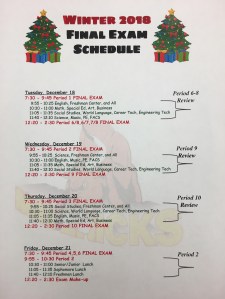
Just two weeks ago we were in the throes of final exams, stressed about whether we’d get all that grading done before dismissal for Winter Break, whether PowerSchool would be operating and we could get our grades in on time, whether the stress that got to our students would abate or build as they waited for the verdict on each of their classes. So I hate to bring that all back.

Nevertheless, I can’t write this post without summoning the Ghost of pre-Christmas Past. During finals week, I talked to many teachers in my building about their final exams. How they planned them, what accommodations and adjustments they made, and the creative ways they devised to assess their students’ knowledge.

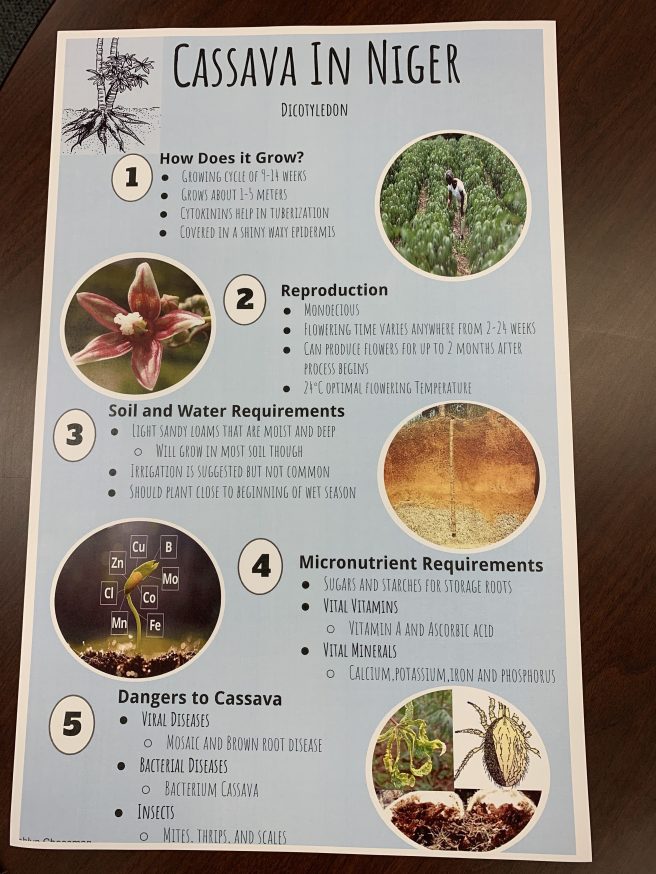
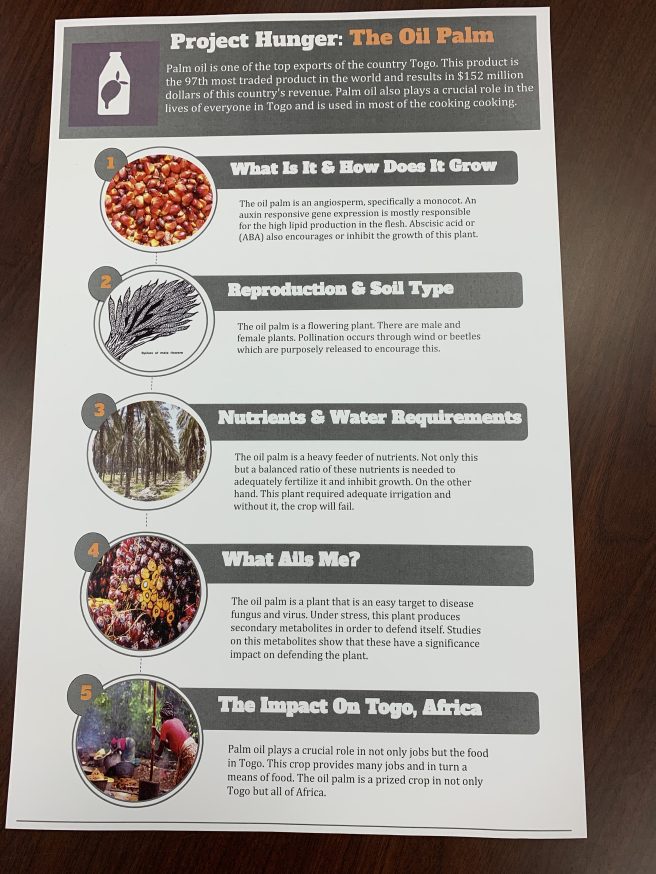
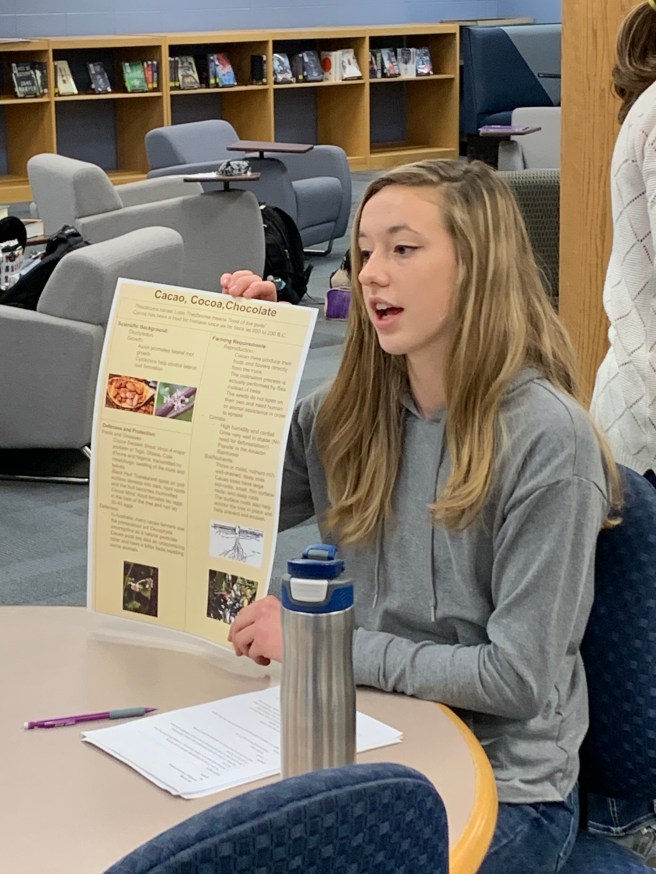
In the Media Center, where my office is located, students were making round table presentations about their research into a dietary staple or a food of economic importance in a selected third-world country. “The Hunger Project” in this AP Biology class caught my attention because each student had created an Infographic to capture the essence of their investigation. Google provides templates for infographics; the students supplied the creativity.

It made me wonder what other creative delivery methods teachers were utilizing to assess their students’ learning. It didn’t take long to hear about other alternatives to standard essays, multiple choice, matching, and short answer questions. An AP History teacher uses podcasting as a tool. Instead of a traditional research paper, students create entertaining scripts in which they investigate the truth–or the fiction–behind popular historical topics. Who knew that Napoleon changed his wife’s name to a moniker he preferred? Josephine Bonaparte’s real name was Rose. But wait! There’s more! Listen to this Podcast.  And this one.

A culinary arts teacher could have elicited pretty boring paragraph answers to questions about safety and sanitation. Instead, the students put their creative minds and a sense of humor to work creating Tik Tok videos. Fun to make, fun to watch!

Dual credit speech students delivered Commencement Speeches in the auditorium; students in other speech classes made award presentations and delivered acceptance speeches. Theater Arts students wrote and performed original scripts. In a Special Education speech class, students drew topics from a hat and delivered impromptu speeches. Although I didn’t see any this semester, in other years, I’ve watched as students delivered their knowledge in the form of TEDx talks. Of course, performance is a natural when the subject is oral communication–or art or music or PE–but there are others: a portfolio of creative writing, a photography exhibit, a display of ceramic or wood art objects, or a musical rendition.

This is not to say that essays, multiple choice, and matching aren’t important or don’t have their place. Many of the teachers who devised the alternate forms of assessment I’ve just described also had written tests. But the range of formats throughout the building gave students a break from the tedium of pencil and paper and the opportunity to creatively demonstrate what they’ve learned, to work together, to learn new skills (e.g., infographics and podcasting), to show their humor and to laugh a lot (the Tik Tok videos). Refreshing.

And so was the PE exam I was invited to watch unfold. The class was Weights. When I showed up at the beginning of the exam period, I went to the wrong room. Wouldn’t you, too, think showing up to the weights room would be logical? But no. The kids were all in the gym itself–and dressed for gym class. I was puzzled, decided it must be a performance exam–but why not in the weights room? Turns out, the performance part of their exam is incorporated into the two 9 weeks grades. The students were in the gym for an old-fashioned paper and pencil test.

Unlike the 9th grade biology teacher, whose students sit cheek by jowl in an overcrowded classroom, who creates multiple versions of her exams so that no two students have all the same questions, the Weights teacher has the luxury of space. Spread out on the gym floor, armed only with a pencil–no sleeves to tuck a crib sheet in, no phones to sneak a peek at–these students, clad in their gym uniforms, sprawled on the floor and watched a video the teacher had made of former students executing the 26 lifts they had learned over the course of the semester. The present students filled in the blanks with the names of the lifts and completed a vocabulary test as well. And then what?

Something wonderful: They got to play dodge ball. They loved it! And they needed it. After a week of tests, whether paper and pencil, electronic or even performance: release!

Which is what we all felt, too, when the final bell rang.

So why am I posting this now? Why not just before that final bell? To be honest, no one would have had the time to read it before the bell rang–or the inclination to do so afterward, during Winter Break. But now that we are back in school and beginning a new semester, it’s a good time to take a look ahead to possibilities for May. Maybe this post will spark an idea that will change it up for you and your students. Even if it doesn’t, welcome to second semester!


Museum of Civilization

It’s nearing the end of the semester. Teachers are writing final exams; students are presenting culminating projects. I’m visiting classrooms to see some of the exemplary work my colleagues and their students have been doing.

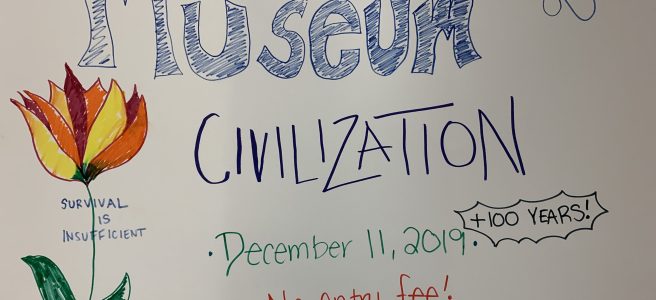
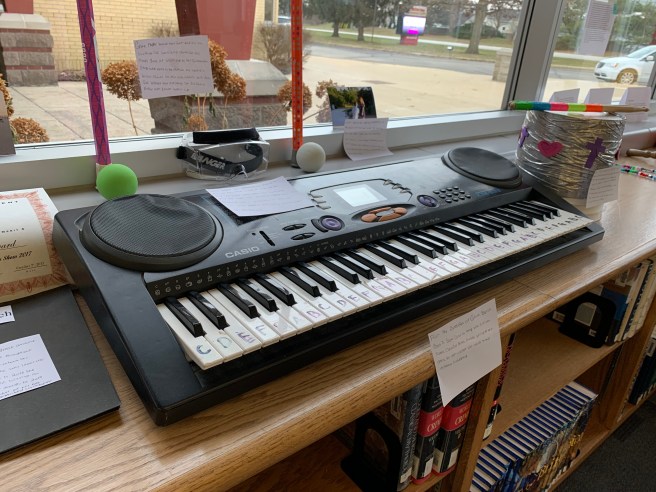
Earlier this week, my colleague Sarah Gessel and her students mounted an exhibition in the Media Center called the “Museum of Civilization.” It was a curation assignment, inspired by Station Eleven, a post-apocalyptic novel by Emily St. John Mandel that has become a staple of the English curriculum following an all-community read that our English teachers had a hand in designing.

A character in that novel establishes a “museum of civilization,” an exhibit at the deserted airport, of the world as it used to be. Mrs. Gessel wanted her students to understand how objects become symbols of individuals as well as of the collective. She wanted her students to understand that their individual dreams and ambitions, their likes and loves, their pastimes and pleasures, their actions and accomplishments encapsulate them as individuals and, collectively, characterize their generation. She wanted them to think critically about the objects in their lives that capture the essence of each of them. Here was Mrs. Gessel’s assignment:

Background: In Station Eleven, we learn that Clark is the keeper of the Museum of Civilization at the airport. There, he preserves items of the past that represent mankind before the flu. 

Question: What three things would you personally put in a Museum of Civilization a hundred years from now that would represent you as a whole? You may not use a phone.

Assignment:

  1. Choose three items that represent you as a person.
  2. Create a display “From the collection of ___________ (you)”. Your collection should contain a brief description of who you are (written in 3rd person!), including birth year.
  3. For your display, you must have the actual item.  If that is not possible, a picture will have to do.
  4. For each item, you will create an informational label (like you see in a museum under an artifact). It should contain:
    1. The time period it is from
    2. Its use or symbolism
    3. Why the object was important to him or her
    4. What it tells the future about the person  
  5. Here is a very basic, rough idea of what I am looking for…except yours should be real…not on a document.

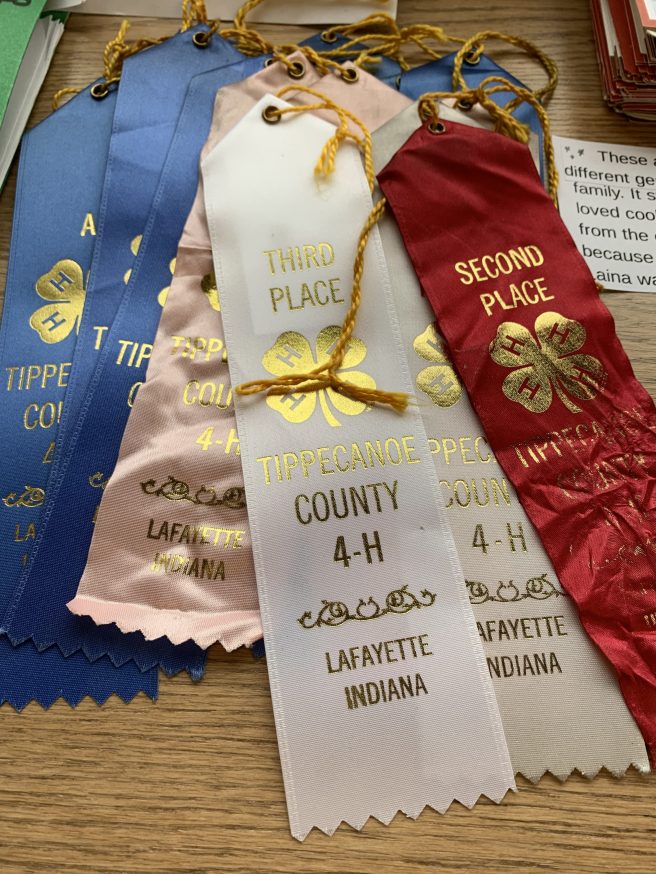
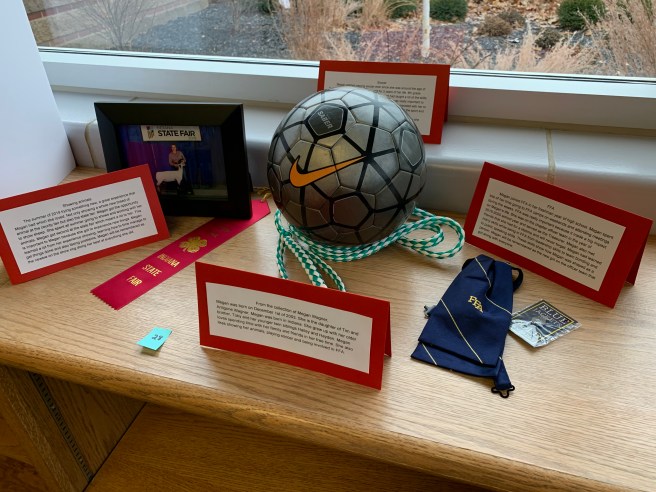
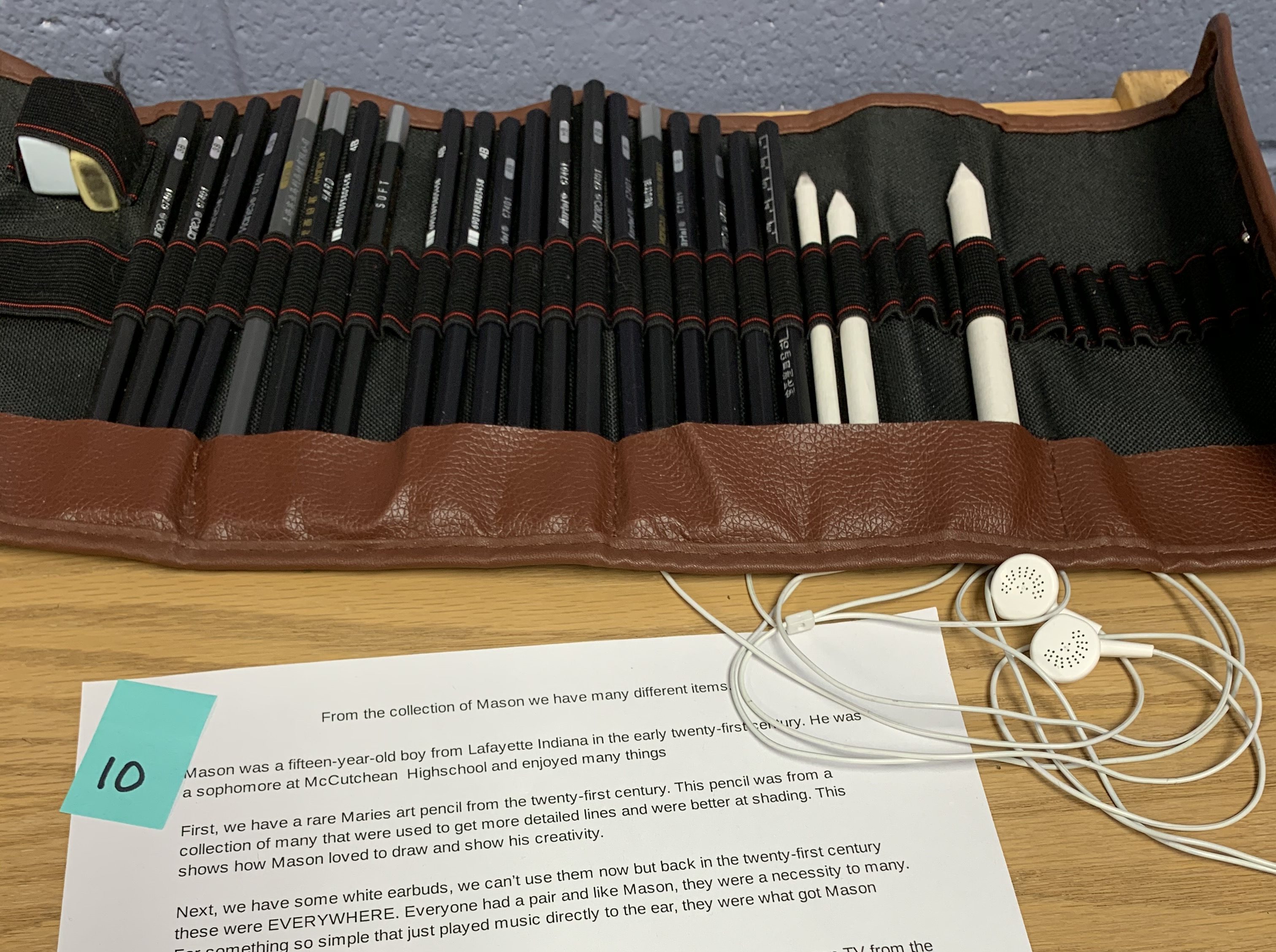
Here are some of the items students brought to school:

Some of their artifacts were poignant–a necklace made with a dear friend, now deceased; a stack of recipes from a grandmother; an old movie camera that launched what might well become a career:

Yes, there were earbuds and screens, but not many. In fact, what I noticed in addition to the wide variety of artifacts was the overwhelming lack of electronics. Admittedly, Ms. Gessel forbade phones, but earbuds and other electronic paraphernalia did not dominate the displays. Instead, there were the indicators of family, friendship and faith. Of interest in the arts, organized sports, and individual artistic pursuits. In children, in 4-H, in books, in cooking. Ms. Gessel’s students, like most teenagers if critics would just look beneath the surface, are not the zombie-like, plugged-in and tuned-out youth so often caricatured. These are kids I want to know better, unique and interesting individuals who are going to be in charge of a world I want to live in.
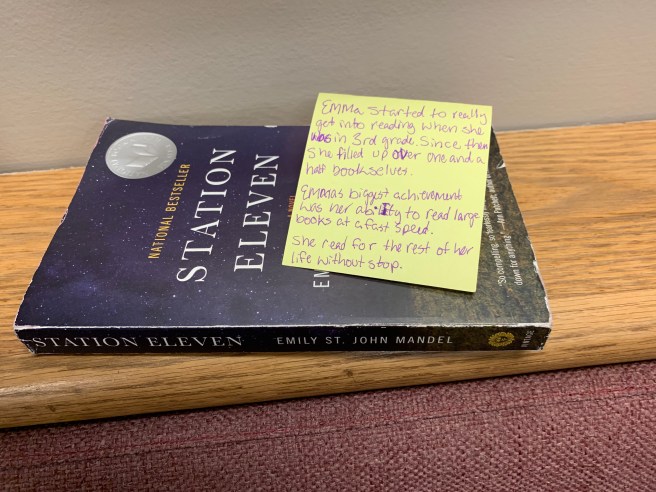
And here’s what happened afterward, after the spectators left, after the voting by gallery-goers was over, after the grades were assigned: The students looked at each other’s displays and something spontaneous occurred. Here’s what Ms. Gessel wrote to me:

My heart is full as I am sitting here thinking of the time we just spent last hour enjoying each other’s company as a class. All of their “stuff” is great, but what made so many of those items in there come to life were the kids. Watching them ask each other to play their instrument or sing or dance or compliment each other’s artwork or just comment on how nice it was just to chill with each other and listen…WOW. No museum can hold that amount of wonder or life. This is why I teach and am still teaching!

If you would like to know more about curation as an instructional tool, click here to read this article by Jennifer Gonzalez in Cult of Pedagogy.

#RedforEd: Signs of the Time

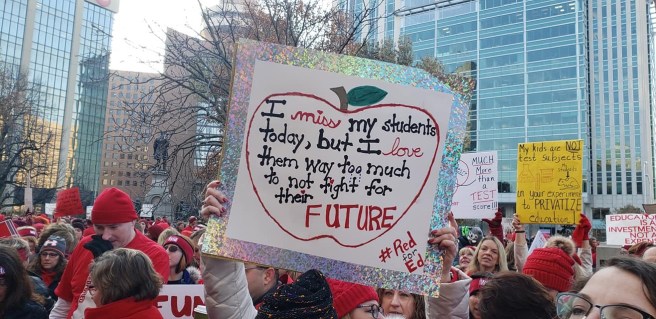
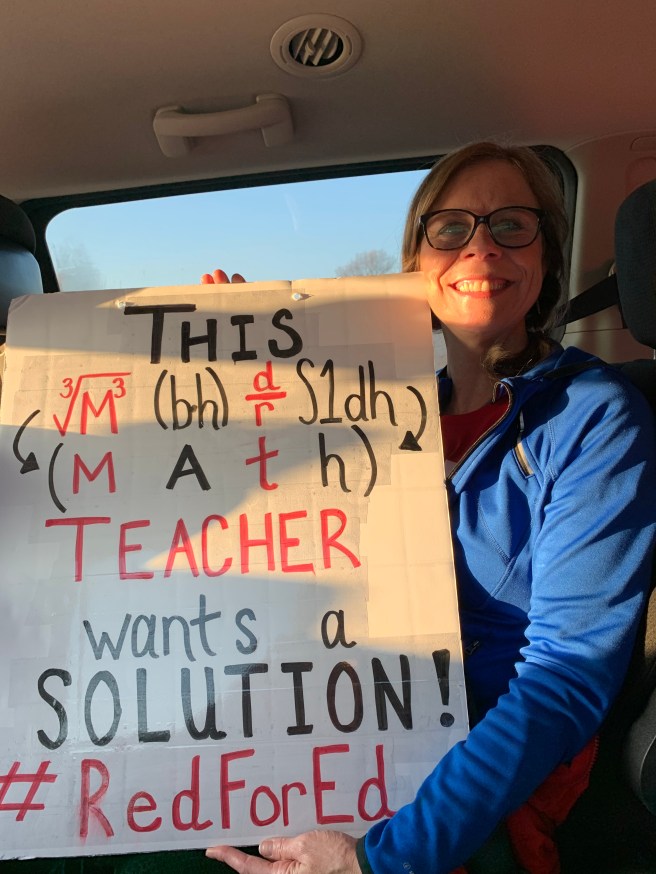
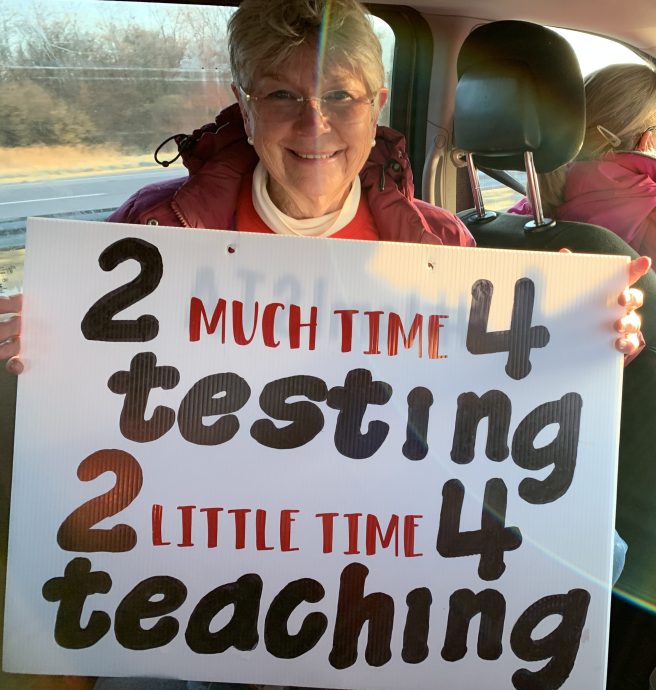
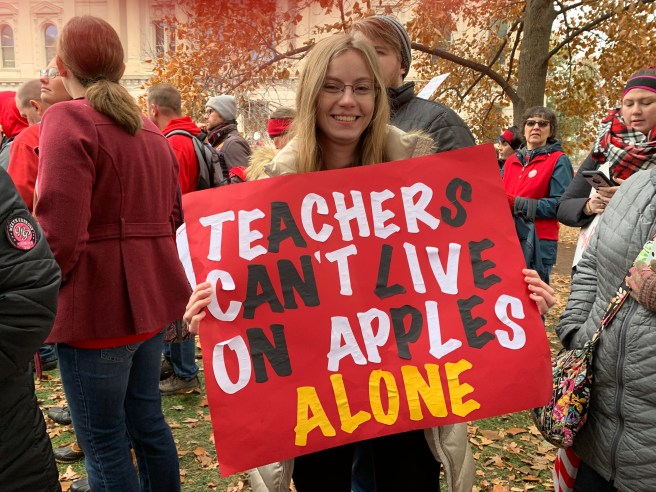
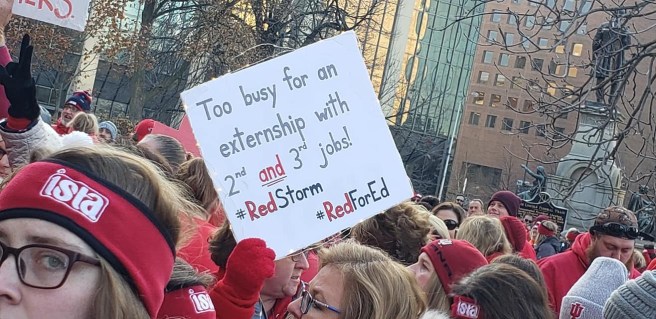
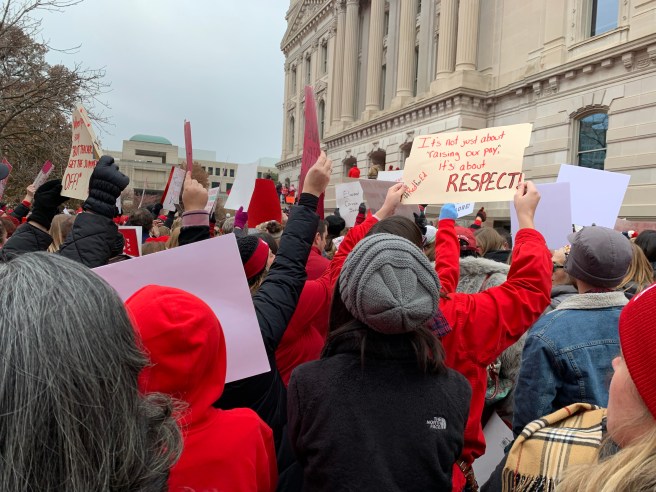
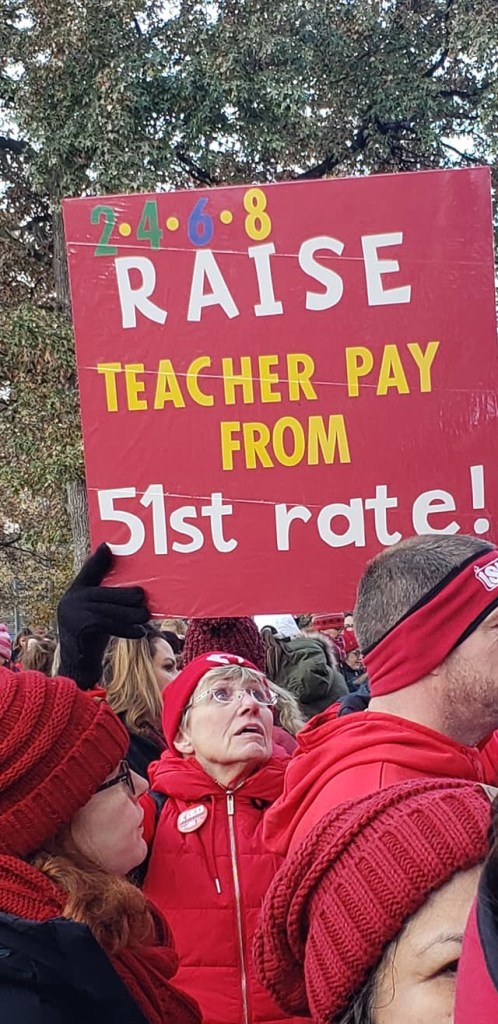
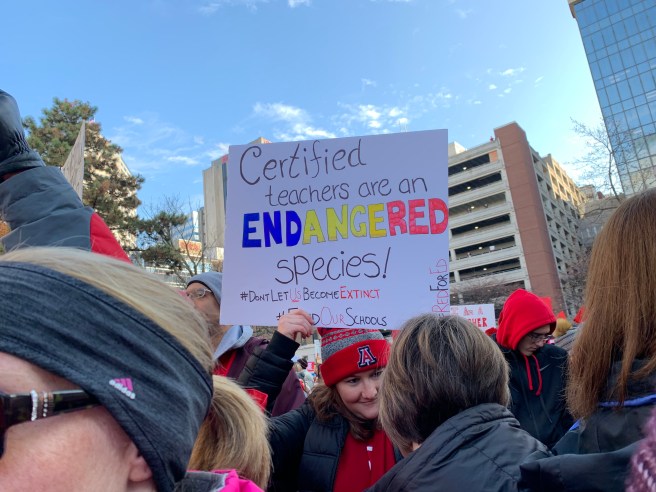
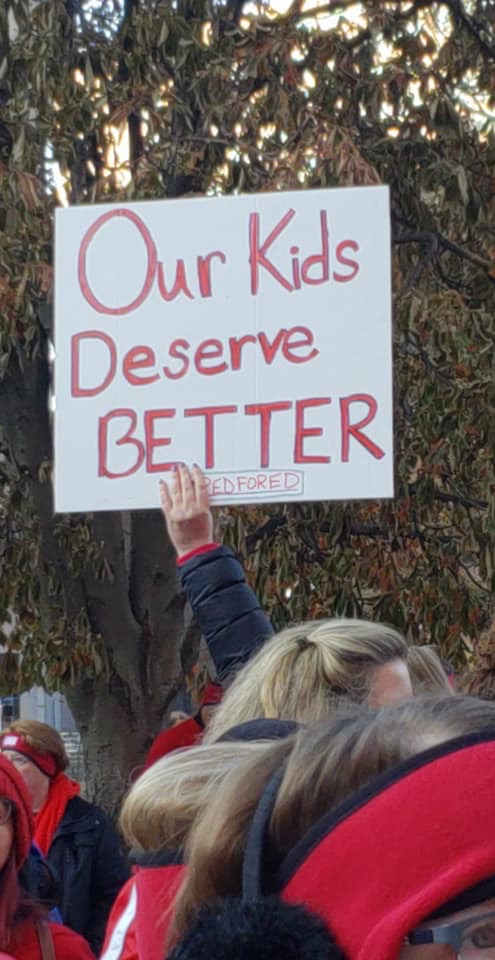
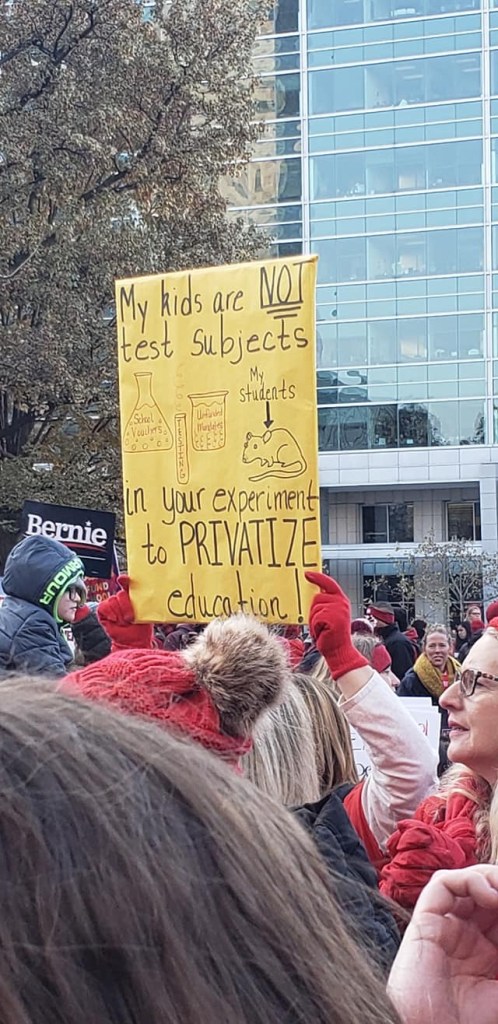
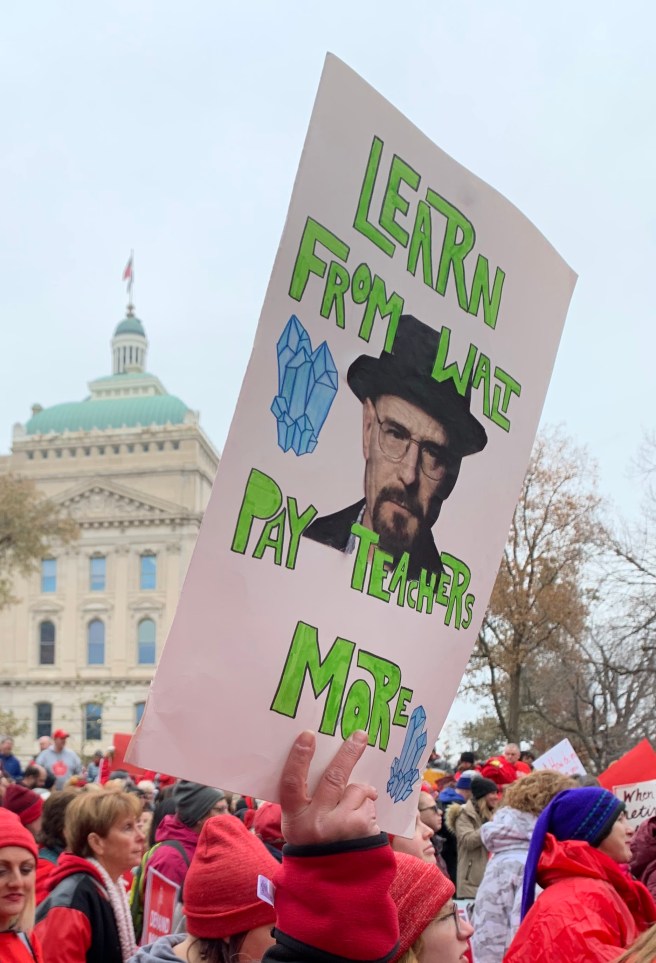
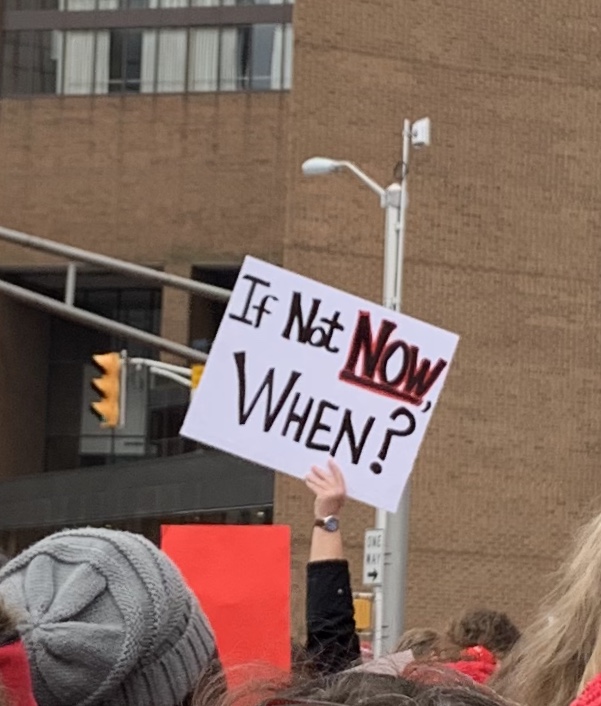
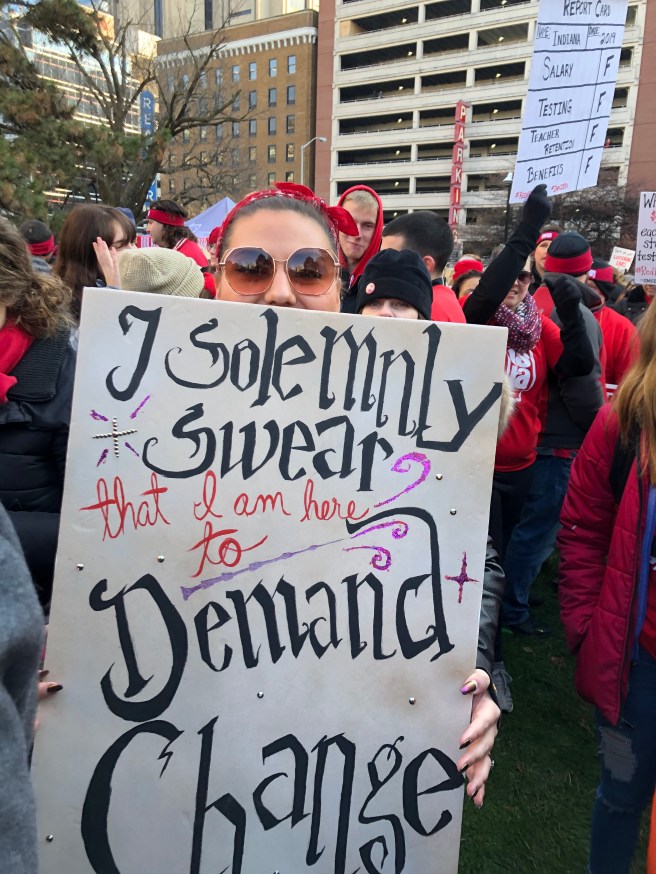
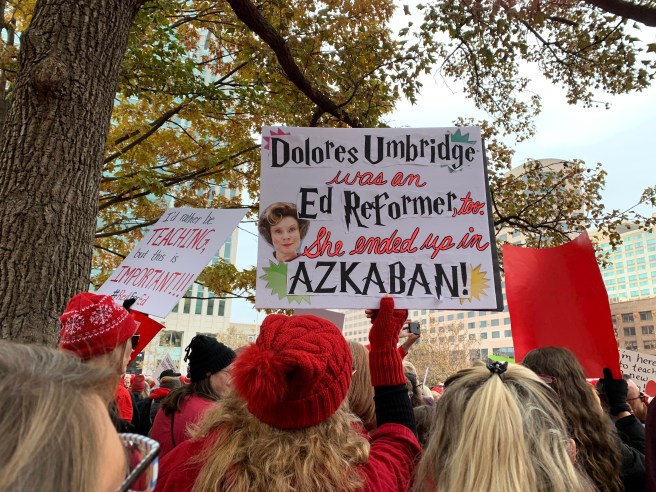
From inside our car on the way to the #RedforEd rally in Indianapolis yesterday, to the gathering on the Statehouse lawn, to the hallways of the capitol building itself, the signs told our story–more eloquently, more imaginatively, more impactfully than anything except maybe the aerial shot of the sea of teachers dressed in red.

Image may contain: crowd, tree, sky and outdoor

Students, students! What do you see? I see my teachers, fighting for me!

It was cold in the morning, but the predicted rain held off until noon, and even then, the sprinkles didn’t dampen the fervor of the teachers and their supporters nor deter the steady stream of arrivals. As one sign said:

When this many teachers show up, you know you have homework!

  • We are here because we love your kids!
  • Time to use my teacher voice!
  • Don’t stand by! Stand up! Stand strong” Stand together! #RedforEd!

The signs clarified the issues:

  • Teach more, test less.
  • It’s not a shortage, its a crisis!
  • Teachers just wanna have funds!
  • Who can justify #100 million every year for standardized testing?
  • I’m certified in economics. Do you need my help?
  • You wouldn’t be a legislator without educators!
  • My students are more than a test score!
  • Teach more, test less!

And finally, this one carried by a boy about 9 or 10:

Too many of me, not enough of them!

#Red for Ed! Indianapolis, November 19, 2019 #RedforEd

Some of the teachers from McCutcheon High School

Why We Teach, 2019

Only a few years ago, the “office humor” that circulated among educators on the Internet went something like this: “You know you’re a teacher if…” 

The ensuing list of indicators would have made anyone outside the profession wonder why on earth a person would become a teacher in the first place, never mind staying on year after year. The list highlighted job features like these:

  • no social life from August to June
  • high susceptibility to chicken pox, colds, sore throats, and flu 
  • a compulsion to put grades on grocery lists, telephone messages, and junk mail

But office humor these days is dark. It’s more than simple comic relief. Teacher salaries are lower than ever and the workload itself is greater: more students, more classes, more documentation, more standardized tests. Snowplow parents, the glare of the media, and public shaming on Facebook. Fewer substitutes, less funding for programs, and even less money for teachers. All of it is true. All of it is anguishing.

So why in the world would anyone become a teacher? Why would they stay on?

Because there’s another story.

  • It’s the young woman whose resume landed her a full-time job–the resume you gave up your lunch period to help her compose.
  • It’s the math students you’ve driven to Saturday competitions and the art students you’ve entered in contests so they can test their strengths and hone their skills.
  • It’s the “struggler” who didn’t like to read, the one you worried about and stayed after school to help, who finally confessed when he finished a novel you suggested, “This is the first book I’ve ever read cover to cover.  I really liked it, too.”
  • It’s the girl who said, “I didn’t have any friends until I joined your club!
  • It’s the student whose lines you listened to over and over and over again until you could recite them yourself–but the play was a success and the student was a star.
  • It’s the ones you’ve stayed up all night for at the after-prom and the lock-in. 
  • It’s the ones you’ve monitored early in the morning on “study table”–it kept them eligible for sports and it kept them in school.
  • It’s the ones you’ve written college recommendations for and hugged  when they told you the good news: “I’ve been accepted!”
  • It’s the ones you’ve helped in the library when they “couldn’t find anything.”
  • It’s the boy who said, “You made me work.  You taught me how to study–and now I’m going to college!”  This is the boy you agonized about on the weekends and lost sleep over at night because no one at home seemed to be helping.
  • It’s the ones who’ve come back from Middle School to say, “You really did know what skills I’d need in sixth grade!”
  • It’s the children for whom you’ve been a stand-in parent on Family Nights.
  • It’s the ones you’ve taught how to run computer programs–students who weren’t even in your classes.
  • It’s the ones for whom you’ve paid the field trip charge.
  • It’s the ones to whom you’ve given lunch money.
  • It’s the ones you’ve bought winter coats.
  • It’s the children upon whose doorsteps you’ve left holiday gifts–and then driven quickly away.
  • And it’s the light in their eyes and the lift in their voices when they learn how to read, or convert fractions, or understand covalence, or give a speech, or shoot a basket, or play the clarinet, or fix a car’s transmission…  

 Ask any educator: stories like these are the sustaining force in our professional lives, the compensation for those skipped lunches, sleepless nights, constant criticism, and endless piles of paperwork that consume the evenings and weekends. 

It’s the kids.  They’re the reason why we teach and the reason why we stay.

A Harvest of Lessons

It’s harvest time now in the Midwest. Driving across central Indiana and Illinois last weekend, I noticed all the harvesters in the fields, the golden pyramids of corn in the grain carts, the dust that swirled around the car from combines close to the highway. I wasn’t the one driving, so I had some time to gaze into those fields and reflect on some valuable lessons taught to me by my students—specifically, by my FFA students.

I live in a farming community and have taught in the same (at one time, mostly) rural district since the early 1980s. I grew up in the town where John Deere’s headquarters are still located and where J. I. Case, Minneapolis-Moline, and Allis-Chalmers all had manufacturing plants. Moline, Illinois: The Plow City, it was called.

But I was not a farm kid myself. I was pretty ignorant, when I first started teaching in Indiana, not of the importance of farming, but of the realities of farm life.

I learned some important lessons early on.

That very first year I was teaching 8th grade English, and in early May, I assigned a research paper to my students. Our school library was pitifully small; the only non-fiction sources on the shelves were encyclopedias and magazines like Good Housekeeping and US News and World Report. Not likely we’d find information on the various topics I’d asked students to choose from. So I did the logical thing: I required kids to go to the public library. In some cases, that meant as much as 40 miles round trip on a week night.

A dad set me straight right away. His son delivered a handwritten note the very next day (This was pre-email, pre-telephones in the classroom, and certainly pre-cell phones): “Mrs. Powley, This is planting season. My son is needed in the fields. He will not be going to the library after school.”

In my city life experience, going to the library was routine. It had never occurred to me that a family wouldn’t just drop everything at any time and take their son or daughter to town. I can’t remember now if we changed the boy’s topic or if I found resources for him myself or whether I waived the library requirement—but I sure learned something about flexibility from this experience. More than that, I learned how important it was to know and understand my students and their lives outside my classroom. Had I known more about the community I was in, I would have done what I did the next year: I still required the students to go to the public library—but I moved the assignment to March.

Another year, my teacher was a student who didn’t seem to take my senior composition class very seriously. He was frequently late with assignments and often tardy to my first-hour class. One day, after I’d repeatedly tried to shame him into caring about what I had to offer, he came bursting into the classroom half an hour into the lesson. He slipped into his seat and tried to avoid creating a ruckus, but he was out of breath and his shoes were all muddy. I was on the verge of chastising him once again when he blurted out, “The cows got out!” Suddenly, pronoun antecedents didn’t seem so important, and I learned something about humility. This boy was carrying a man-sized load on his family’s farm. No wonder he was behind all the time. In this case, the office excused his tardy–and I approved.

In another class, another year, yet another student talked to me—talked to the class, really, in an oral report on the pioneers of the West—about the way the soil compacted wherever the wagon trains rolled. The traces of their travel remained, showed up decades later in fields where crop growth lagged in just those places the wheels had turned over and over again. The same is true today when heavy machinery packs the earth—in forests, in fields, and even in sand. In this case, the lesson for me was about variety. Not always doing the same thing I’d done the year before and the year before that. Plowing fresh ground and rotating crops means richer conditions and better yield. The same was true of my lessons, my units, the books we read, the papers we wrote. I stayed fresh and my classes were more engaging for it.

In any community, there are mores and considerations that teachers need to understand in order to serve their students. That doesn’t mean we surrender our authority or give over our instruction, but rather, that we work in harmony with the people we serve. That’s one reason why parent-teacher conferences are important. We learn more about the families in our communities—who they are, what they do, what they hope for and expect from their children and from us. And parents learn about us—who we are, what matters to us, what we have to offer and what we expect from our students. Successful teachers develop partnerships with their students’ parents.

It’s why coaching a sport or sponsoring a club matters. It’s why attending school events registers positively with students and parents. We show we care about our kids and care about community when we show up, give of our time, engage. We build rapport. When we understand the community, we know when to be flexible, when to show some humility, and when it’s time to try something new.

All of these lessons, a rich harvest, taken from the fields and learned over time in my American classroom.

What Teachers Can Do for the Children at the Border

Reporters were let in—but only to a limited area of the Clint, TX facility. No pictures allowed. No interviews with the children being held there. No inspection beyond the prescribed tour route. No visible evidence of toys or books or art supplies or anything to distract children during the day—except one TV in one small area and a basketball hoop outdoors where no children were playing.

But supplies and food—and yes, toothbrushes—were on the shelves in the storerooms the reporters were allowed to see—suggesting, of course, that the children were being fed and cared for.

This facility was designed for 100 occupants for an 8-12 hour stay. Instead, as many as 700 were held at one time and for as long as 30 days. Then, lawyers went public with information about the inhumane conditions.  By the time reporters got in, “only” 300 children were being held there. Shortly after that, 249 children were removed—and then 100 were brought back in.

This morning, another report has surfaced. This one includes interviews the lawyers had with the children, the occupants of the facility. The children verify what the lawyers originally reported: ill-fed and ill-cared for children, filthy conditions, sickness, and neglect. In short, conditions that inflict trauma that will last a lifetime.

The current conditions are deplorable, dangerous, nightmarish. For these children, imprisonment follows the horror of separation from their parents. But even if current conditions are alleviated, these children have already suffered from trauma that will mark their entire lives.  We know from the ACES studies conducted years ago by the Center for Disease Control and Prevention and from our personal experience in the classroom with our own students—American-born as well as immigrants and refugees—that childhood trauma impacts learning. It interferes with cognitive processing, provokes inappropriate behavior, results in poor mental health, and leads to medical problems, social problems, economic problems in adulthood. In other words, a lifetime of strains on society. We know from the research on epigenetics that trauma is processed in our genes–and transmitted to future generations. So this nightmare does not end.

When these children are released to their families in America, they will soon or eventually be in our classrooms where we will do what teachers always do: help them, teach them, love them–fiercely. But we will not be able to erase their experience. If they are returned to their own countries, they will be further damaged by desperate conditions that will not have changed in their absence. At Clint, TX and other detention centers in this country, we are creating future miseries as well as current ones for these children.

Perhaps the monies appropriated by Congress yesterday will alleviate this situation and similar ones at other centers. But if our attention is diverted, new situations and new abuses will surface. One bill passed by Congress and one stroke of a pen will not permanently solve the problem, will not prevent recurrence. The money will run out and the outrage will settle down—unless we remain vigilant, committed to righting this wrong, and vocal.

We are teachers. We have experience with childhood trauma. Who better to speak for the children? We must educate ourselves about what is happening to immigrant and refugee children now; send money to organizations working for their well-being when we can; write and call our representatives in Congress with our concerns; reach out to our colleagues, our students, their parents, and our friends; and let our voices be heard—over and over again. We owe it to the children.

Further Reading:

Pitzer, Andrea. ‘Some Suburb of Hell’: America’s New Concentration Camp System. NYR Daily, New York Review of Books, 21 June 2019. 

Romero, Simon. “‘Don’t Talk to Her’: A Glimpse Inside a Troubled Border Station Housing Migrant Children.” New York Times, New York Times.com, 26 June 2019.  

Rose, Joel and Bobby Allyn. Scenes Of Tearful, Flu-Stricken And Underfed Migrant Kids Emerge In New Accounts.” npr, 27 June 2019. 

‘Tis the Season to be Stressed

IMG_0546Almost the end of the semester. For high school students, the run-up to the holidays is likely to be stressful, thanks to those dreaded final exams. Guest blogger Mike Etzkorn, a math teacher who leads McCutcheon High School’s Maverick Launch program, explains why the short-term stress brought on by finals can actually benefit students–and offers some tips to help students through this and other stressful experiences. Welcome, Mike, to In an American Classroom. 
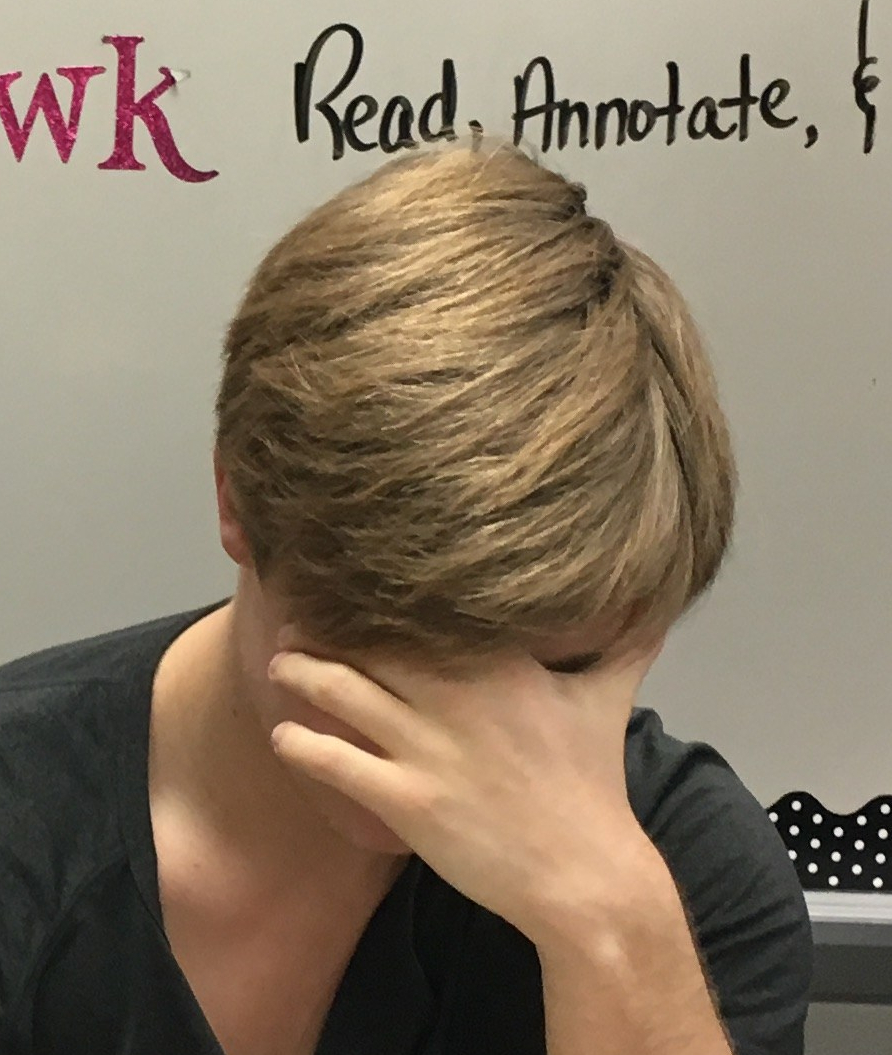
‘Tis the season to be jolly; however, for so many of our students and children, ‘Tis the season to be stressed.  Finals week is almost upon us and with it comes stress for students. The American Psychological Association conducts an annual survey of high school students relating to stress and has demonstrated that high school students are more stressed out now than ever before.  As of late, a tremendous amount of time, effort, and energy has been expended within our educational system toward helping students learn how to cope and de-stress. These efforts are necessary and beneficial, but we also need to look at the difference between acute (short-term) and chronic (long-term) stress.

Acute stress can actually have many benefits.  Richard Shelton, MD, vice chair for research in the Department of Psychiatry at the University of Alabama Birmingham, says that “low-level stressors stimulate the production of brain chemicals called neurotrophins, and strengthen the connections between neurons in the brain.” Acute stress can temporarily improve memory and motivate productive behavior.  Dr. Shelton also says learning to deal with stressful situations can make future ones easier to manage, thus teaching resiliency and grit. It’s the idea behind Navy SEAL training, he reports as well.

I like to call this concept raising our stress threshold.  The analogy I use with my students is that stress is like a muscle.  Weightlifters will “max out” when lifting, which means they take their muscles to the top edge of their limit, causing their muscles to fail.  This is a very painful and uncomfortable experience. Their muscles burn, shake, and ultimately can’t handle any more weight. After a recovery period, the next time they lift, they are able to raise their maximum weight.  Acute stress is exactly like maxing out when weight lifting. When we experience acute stress, we are maxing out our stress threshold. This is an uncomfortable experience, but once we have pushed through the temporary stressor, we are able to tolerate more stress the next time.  

When I reflect on my own educational experiences, I can recall numerous all-nighters or tear-filled nights, experiencing my own personal stress threshold max.  My first experience with acute stress occurred during my freshman year history class with Mr. Crismer. Each quarter, we were assigned a nine-to-eleven-page research paper on a randomly assigned historical figure. We were required to have three sources, and in the days before the internet, we had to dive into the old-fashioned library catalog cards. If we were unlucky enough to get one of the more obscure historical figures, it sometimes took three different libraries to find those three sources.  We were given two weeks to complete the assignment, and all the work had to be completed outside of class time. Freshman year was the first time I pulled an all-nighter to complete an academic assignment, and it certainly was not the last. Through my first acute stress experience, I learned how to power through the stress to accomplish my goal.  This particular stressor (my paper) presented itself over a two-week period, with an end in sight, concluding with the completion of the project. 

Learning how to utilize acute stress to boost grit is a lesson every student needs to learn. Academic stressors, which are acute in nature but deployed in a safe, controlled environment, are beneficial and should not be removed or eliminated.  Instead, they should be utilized to teach our students the resiliency that is needed to succeed beyond the classroom.

Although the task of writing a history paper seemed insurmountable when I was a freshman, we all know that life has challenges that are far more overwhelming.  The lessons I learned in resiliency during my high school years helped me fight through a literal battle for my life: cancer. At age 24, I was diagnosed with chemoresistant metastatic cancer.  I spent nine months enduring surgery, traditional chemo, more surgeries, and high dose second line chemo. This nine-month experience not only took its toll on me physically but also mentally. Without my past stress experiences raising my stress threshold, I would not have been able to handle the challenges that presented themselves during that fight.  

As a parent of three adult children, I look back at whether or not I did enough to prepare my children for the stress of adult life.  I always had to ask myself: Did I push my children enough? Did I push them too hard? Did I help them navigate the stressors of adolescence so that their stress threshold was raised enough for them to have the grit necessary to succeed in life?  Were the tear-filled all-nighters worth it? Did the “No, you cannot quit the team, you will finish what you started. Suck it up buttercup!” speech teach them to fight through adversity? Even though the experiences were painful for them, and painful for me to watch, was it worth it?  As educators and parents, it is our responsibility not to remove the stressors from our students’ lives, but to help our students raise their stress threshold in a safe and controlled environment. So as we progress into finals week, let’s utilize this time to help prepare our students for what is to come after they leave the safety of education.  

Ways to help your student through the stress associated with Final Exams:

  • Remind them that their stress is temporary.  
  • Encourage them to put forth their best effort.  “If you do your best, you can walk away holding your head up high no matter the result.”
  • Help your student maintain a healthy balance between work and de-stress time.
  • Be supportive and encouraging, remind them that you are proud of how hard they are working.  
  • Remind your student that healthy eating and sleeping habits are just as important as studying.  
  • Urge your student to ask for help when they need it, share with them a time when you had to ask for help.