Thanksgiving: For My Former Students

IMG_3253

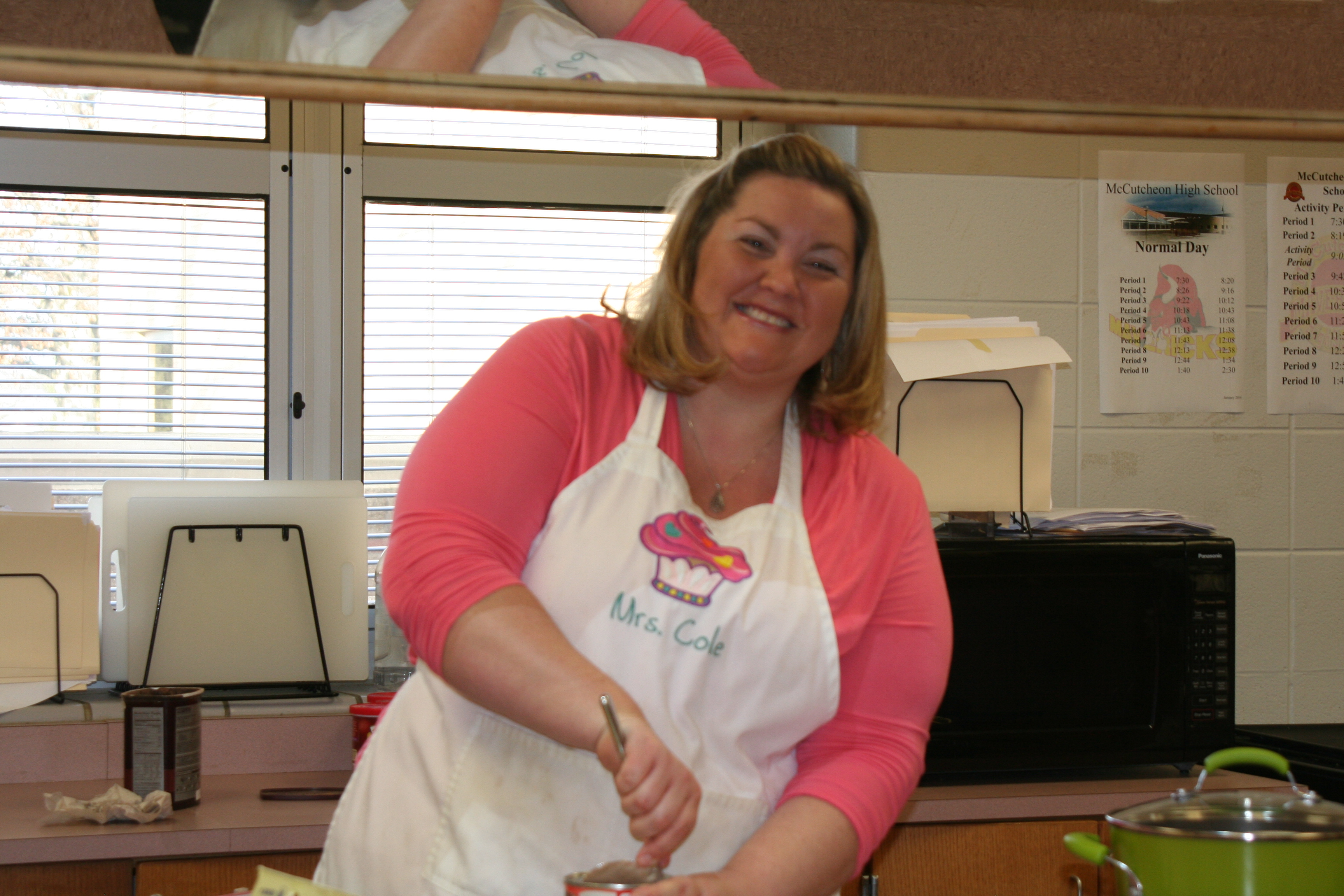
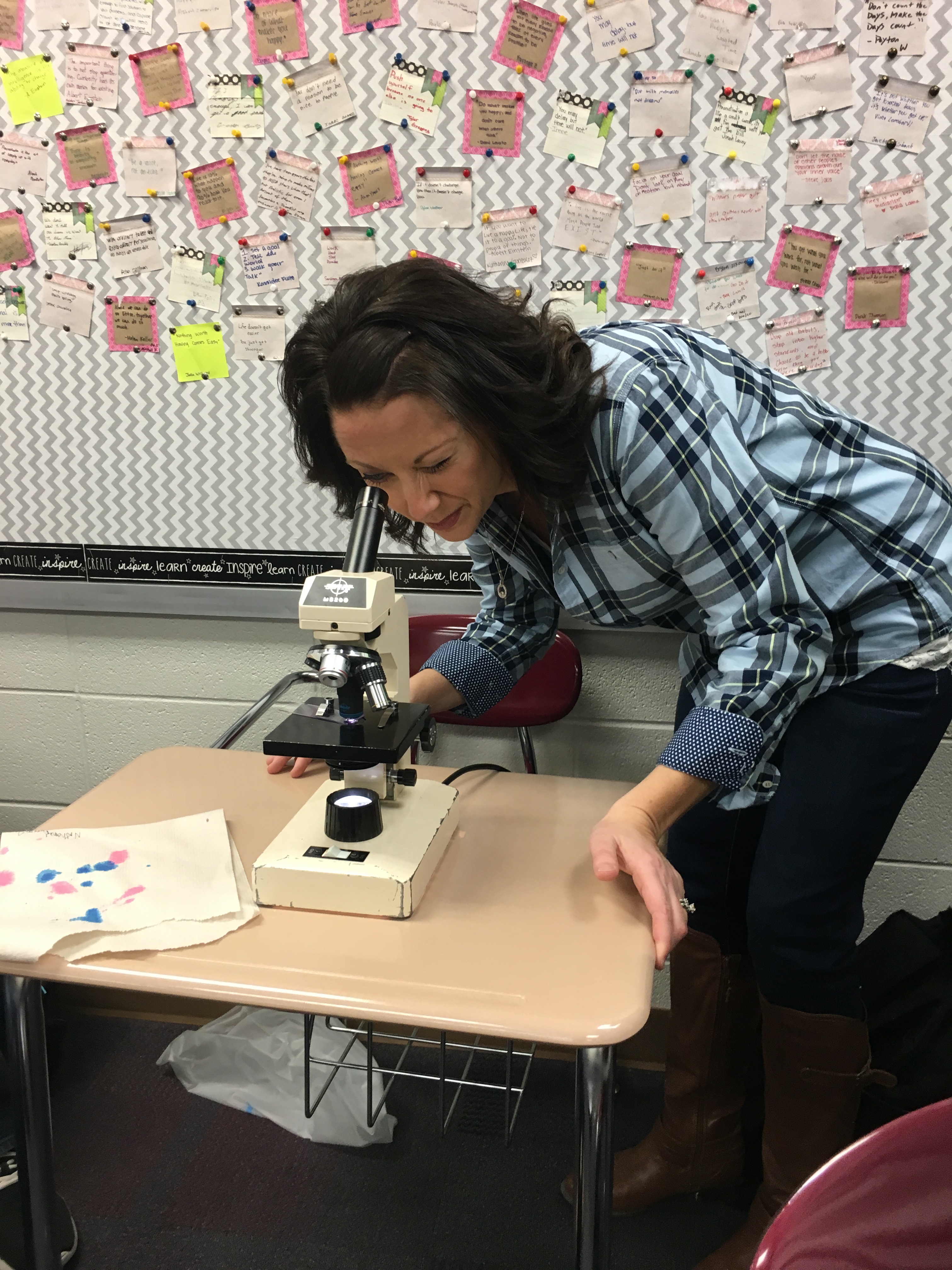
Posting this piece at Thanksgiving has become a tradition.  Once more, the holiday gives me an opportunity to say thank you to my former students. You’ve enriched my life beyond measure, and I am grateful for the time we spent together and for the contribution you are making to our community and to the world.  Was it worth it? All that time and energy and love? The answer is yes. Every single day, every single year. 

You have sold me carpet and cleaned it, accepted my dry cleaning, butchered the meat for my table, helped me find clothes in the right size,  checked out my groceries at the supermarket, and brewed coffee for me at Starbucks. I’ve regularly walked with one of you in the March for Babies, and I’ve removed my shirt in the doctor’s office so another of you could give me a shot. I’ve run into you in bookstores, grocery stores, elevators, and train stations, been in attendance with you at concerts and plays, and even been hailed on the street in a distant Western town. One of you approached me in an airport and went on to describe your work repairing the wind turbines in a county adjacent to ours.

Some of you have been wounded in war, and others of you are still serving. I’ve worried about you in Vietnam, in Iraq (I and II), in Afghanistan, and in other troubled spots around the globe. Recently, one of you died serving this country. Our whole community mourned, and that year, in your name, students at our high school collected items for Care Packages for soldiers stationed around the world.

Some of you have worked for my husband or me. One of you is a contractor who remodeled my husband’s lab; another was his lab technician. Two of you have taken care of our yard during the summer when we have been on vacation; another has walked our dogs.  You’ve waited on us in restaurants; you’ve hauled boxes for us when we remodeled.

I’ve worked with one of you on a research project and together we’ve served on the board of a community organization.

Many of you are my Facebook friends; some of you read this blog. Some of you follow me on Twitter.

You’ve substituted for me in the classroom, and a great many of you are teachers yourselves. One of you is an author and instructional coach; another several of you, school principals. Some of you are nurses; some doctors. At least one of you sells real estate, three at least are lawyers, and many of you are college professors, even Department Chairs at your universities. Some of you sell produce at the Farmer’s Market; others farm on a larger scale. I can count among you a writer, a chef, a veterinarian, and a musician.  A television personality and a museum director. A singer and songwriter, a pitcher for the Padres and another for the Marlins. A videographer in Hollywood. A welding instructor. A dancer. Several of you are pharmacists. One at least is a politician, two of you worked as field managers for candidates in our last election. One of you is a personal secretary to someone in Germany.  Beauticians and therapists and specialists of all kinds. An artist and a computer design expert. A journalist and a newspaper editor. One of you was a nun, but left your order; one is a priest who has stayed. Managers, retailers, and business owners. Police officers and firefighters, automobile salespeople and automobile mechanics. Electricians and plumbers and heating and cooling experts. You work in personnel and transportation, retail and manufacturing. You are receptionists and cashiers.  Peace Corps volunteers and public relations specialists. Computer programmers, technicians, and web page designers. Executives and line workers. Bus drivers. Cafeteria workers. Lab assistants and physicians’ assistants. So many of you I can no longer keep you all straight.

Some of you came to this country as refugees and immigrants, only to meet new obstacles here. You worked hard and long to weave yourselves into the fabric of this nation, making me and your families proud of all you have accomplished. Many of you had different struggles–you faced challenges no one should have to–but you had determination and the will to succeed. You still work hard, all of you, every single day, to make this world spin round.

Teachers often wonder what becomes of their students, the youth upon whom they have lavished so much time, attention, and love. I am surprised when I list you out like this, and I see immediately what I didn’t wholly envision would happen when you were before me in my classroom year after year after year.

When I knew you, you were children. But you have grown up, evolved, moved past Crazy Hat Day, experimental make-up, video games, and babysitting. Past blue hair and nose rings, past balloons on lockers and crepe paper streamers suspended across hallways. You have come of age, turned your promise into purpose.

You haven’t all won prizes, achieved fame, or made a fortune, but you all make me proud. I had a hand in helping you learn the skills you need to keep our universe spinning. Now you help me. You ease my life, keep me safe, and bring me joy. I’ll take that.

And give thanks.
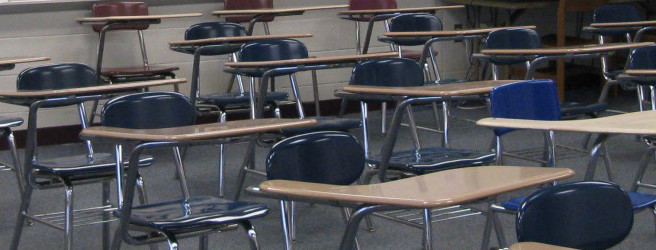
This is not a Drill

• Lesson planner
• Gradebook (or PowerSchool)
• Google Suite
• Pencils, markers, pens, and paper
• Whiteboards and dry erase markers
• Access to a copy machine
• Books—classroom sets and single copies
• Tables and desks and chairs
• Bulletin boards, construction paper, thumbtacks
• Instructions for what to do in the case of a fire, a tornado, a lockout or a lockdown

Here’s the drill:

Begin with the objective: What is it you want your students to know or be able to do? To write an objective, start with a verb provided by Bloom (6 levels) or DOK (4) and follow the verb with a direct object. Think about what the students will be doing to demonstrate understanding of the objective. So, for example,

• Analyze a story
• Solve an equation
• Perform an experiment
• Write an essay
• Move the nation

Consider what the students need to know before you begin the lesson and what prior knowledge they may have that will inform the ease with which they will grasp and be able to complete the task. (You may have to scaffold the lesson for some students; for others, you may need to let go.)

Of course, assessment is required, so you need to be clear in advance (for yourself and for the students) just how you will assess their work, what will constitute attainment of the objective, and to what level of attainment they may strive.

• Emma Gonzales
• Yolanda King
• The 11-year-old with the haunting eyes and the wisdom of age
• The boy from Parkland with his Marco Rubio tag: $1.05
• The girl from South LA who learned to dodge bullets before she learned to read

Now think about the instructional methods you will use so that students will be able to demonstrate their understanding of the objective. Perhaps you will organize group work such as a jigsaw activity; that is, the students each share a piece of the story, together creating a whole understanding. Or you might design a reciprocal teaching task, where together a group will read a text and puzzle out its meaning from individual perspectives.

Maybe you will set the students to an independent task, one in which they’ll rely upon what they have read, what they have experienced, and their own wits, should they still have them.

• Their passion
• Their voices
• Their vision
• Their presence
• Their command
• Their poise
• Their resolve

Unafraid and unowned.

We can no longer shield them. They have learned too much.
We cannot restrain them. They have too much strength.
We should not impede them. Their promise is too great.

They do not need rubber bands, paper clips, staplers, scotch tape, glue sticks, meditation, long walks in the early morning light or summers to renew and refresh.

Or instructions on writing objectives.

What they need are not the lessons of the classroom. These they have learned.

But they do need us: Behind them, not before them. Supporting them, not instructing them. Letting them go and letting them lead.

This is not a drill.

Go to the Parent Conference

This one is for parents: Why you should do this, even if all is well.
P1000130

Face it: When Parent Conference Night rolls around, we’re all tired. I’m tired from a long day in the classroom; you’re tired from your day of work, too. Frantically eating dinner, remaining dressed up, and driving to the school (perhaps for the second or third time that day) may seem like a lot of effort for a minimal return.

But parents should always attend conferences—even if the teacher says they don’t need to. Here’s why:

For the teacher, you are more than a visible presence that night, more than a momentary reminder that your child’s progress in school matters to you. When you show up at conference time, I have you in the back of my mind all the rest of the year. By meeting you, I get a rounded picture of your child and develop a clear sense of obligation to you as a family. It isn’t that I don’t pay attention to the kids whose parents don’t come to conference. I do. In fact, the most frequent lament about conferences that I voice—and the one I hear the most often from other teachers—is that the parents who most need to come, don’t.

It isn’t that I cater to your child, either—because I don’t.

Here’s the secret not a lot of parents realize: Attendance at a parent conference—or an open house—is not a perfunctory exercise. Parents and teachers form relationships because of these interactions, and the parents who do attend conferences become a sort of litmus test for the ideas we invent, for the questions we have, for the quandaries we’re in. What would Sally’s parents or Joe’s parents think of this idea? This method? This idea for a field trip? This expectation? Could they be a resource? Would they chaperone? Is what I am expecting, reasonable?

Knowing you broadens my perspective. Your responses factor into my decision-making.

And just as I develop a rounded picture of your child when I meet you, you have a better picture of me when you come to the conference: not just what I look like (though that helps when you’re reading an email from me or speaking to me on the phone), but my demeanor, the intensity in my voice, my facial expression when I talk about your child. All of those little clues inform your response to me—and that could be important at some point during our year together.

Bottom line: when you come to the conference, you open up that line of communication between us. There’s a problem I should know about? Something’s come up? It’s easier to call me or email when you know who I am—and it’s easier for me to approach you if we’ve already met.

When you come to the conference, you learn the details behind the grade on the report card. Not just the standardized test scores, though you’ll learn those, too, and you’ll have an opportunity to have them explained. But you’ll also find out what you may not know: that your child is a good listener or a respectful group leader or needs help with understanding figurative language or doesn’t take notes or doesn’t take advantage of extra help or checks out more books from the library than anyone else in the class or went out of his way to help someone else. When you come to the conference, you’ll find out I know a lot about your child and I care about him, too.

Go to the parent conference so your child has concrete evidence that you care, so he or she knows that you will always go to the parent conference, good or bad. If you only go when there is a problem, that will communicate the wrong message. After the conference, let your child know how proud of him you are and how much you appreciate his teacher and the chance to meet with her. Make him think parent conferences are cool because parents and teachers get to talk together about the one person who is at the center of the universe: him. Make your child proud that you attend the conferences. As he grows older, there will be plenty of kids whose parents don’t, and you will want your child to think your attendance is cool, not dumb.

By going to the parent conference, you’re reaching out across the generations. Children watch everything their parents do. Because you went to school to meet their teachers, they will show up at their children’s conferences. It’s all about modeling.

It’s also a chance—and here’s a shameless plug for all the hard-working teachers I know—for a parent to thank the teacher for all he or she does–teachers need pats on the back, too, so a thank you is a boost, and a positive conference is just as important as a problem one, even if it does take up a few minutes when we’re all tired and ready to go home.

And let me add this before I move away from the subject: For the most part, I really enjoy parent conferences. When I open my classroom door and parents drop in, I feel like I am inviting them into my home. In some ways, I am. I spend more awake hours per week at school than at my home, and I do “clean house” for my visitors: I wipe down the tables, clean the boards, tidy up for the occasion. I stop short of cookies and tea (although that might not have been a bad idea for sweetening a couple of the conferences I’ve had in my career).

Many of the parents I see are like family. I’ve taught all of their children—or more than one of their children—and I’ve even taught some of them. Sometimes they’ll stick their heads in the door and wave at me even though I no longer have their children in my classes. If I’m not in conference with someone, they’ll come in to chat, bring me up to date on the kids who are now in college, or grad school, or having babies, or farming, or working in Indianapolis, or traveling somewhere in the world. That means a lot. I’ve invested time, energy, and yes, love in their children, and I really do want to know what is happening in their lives and how they’ve fared in the wider world.

So go to the conference–all the way through high school. Even if all you do is stick your head in the door and wave.

Summertime, Summertime

A few of the new teachers I’ve coached this year approached me when school was ending to ask what they should do over the summer to prepare for next year. I started this list with suggestions for their professional task lists…and then I just couldn’t stop thinking about what else I’d recommend. Maybe I was dreaming about what I plan to do?

So first, the professional:

1. Assess your challenges and spend some time learning about these areas of instruction.  Is it an aspect of your curriculum—say, grammar—that you’re weak on?  Study up on that.  Is your repertoire of instructional strategies slim? Learn about some new ones.  Try Jennifer Gonzales’ The Cult of Pedagogy blog. Do you need to sharpen  your classroom procedures?  Read The First Days of School or THE Classroom Management Book by Harry and Rosemary Wong.  Polish the procedures you already have in place or think through some you haven’t nailed yet.

But a piece of advice: There’s no end to becoming a more effective teacher, so don’t overwhelm yourself with too many self-improvement tasks. Prioritize the aspects of teaching that you feel you need to improve upon, pick a couple, and concentrate on those.

2. Read the books that you’re going to teach.  Make margin notes.  Look for companion texts: poetry, essays, newspaper articles, non-fiction pieces that can accompany the book and broaden, deepen, intensify the students’ understanding. 

3. Read some professional literature.  Expand your understanding of the issues and developments in the education field.  

4. Join your discipline’s national organization.  That will give you access to current thinking in your subject area, to blogs by fellow teachers, to grant opportunities, to inspiration.

5. Speaking of inspiration: Dream—and look for the grant support to fund your project.  Here are a few sources:

Never written a grant?  You do have to plan ahead.  That takes time. Get your ideas together and call on someone experienced in grant writing to read over your proposal before you submit it.

6. Explore websites that you haven’t had time for.

7. Subscribe to a blog written by a teacher in your discipline.

8. Learn something totally new.  (As you learn, think about what it feels like to be a novice at something and let that inform the way you think about your students.)

And what else?  We’re more than what we teach.  (But if you’re like me, you always end up teaching what you’ve learned.  Or using the new in some way in the classroom.)

Any of these sound appealing?

  1. Get outside and enjoy the weather.  Walk, run, bike, swim.  Exercise clears the mind, creates space for new ideas.
  2. Read a book that has nothing to do with education.  Read many books.
  3. Watch the movies you couldn’t stay up to see during the school year.
  4. Reconnect with an old friend.
  5. Take a trip—even if it’s just an hour away. To your state capitol? A tourist destination? Go someplace you’ve never been.
  6. Try out new recipes.
  7. Visit a museum or an art gallery.
  8. Go to a game.  Hit the golf course.  Try river-rafting or kayaking.  Bike across Iowa (http://ragbrai.com/registration/)—or only as far as the next small town: Just ride.
  9. Spend time with your significant other.  With your kids.  With your parents.
  10. Camp out in the backyard.
  11. Write a letter—the old-fashioned kind—and send it to a friend.
  12. Write a professional article yourself.  Or start a blog.
  13. Figure out Twitter.  Or Instagram.  Or Google+.  Would any of them work for you? If you don’t like them, don’t do them.  But maybe one has possibilities—for you or for your class.
  14. Reorganize your Google Drive.  (This is the equivalent of cleaning your room, but it’s oh-so-satisfying after you’ve done it!)
  15. Subscribe to Austin Kleon (http://austinkleon.com/) or Maria Popova’s Brain Pickings (https://www.brainpickings.org/) or another source of eclectic inspiration.
  16. Take pictures with a camera, not your phone.  Learn how it works.  Have fun experimenting!
  17. Try taking a picture of the same thing/place/person every day all summer long.  If it’s a selfie you’re taking, watch the stress melt away as the summer days go by.
  18. Take an art class.
  19. Grow flowers you’ve never grown before, veggies you’ve never eaten.
  20. Try a new restaurant.
  21. Visit your local Farmer’s Market downtown on Saturday mornings.
  22. Take your kids to the airport to see the planes fly in and out.  If yours is a small town, hurray!! You’ll get much closer to the planes than you do in a big city.
  23. Go on your own Genealogy Roadshow.  Start at your computer or a cemetery or by interviewing your relatives.  No matter where you start, this is a trip like no other!
  24. Listen to a Ted Talk.  A new one every day.  https://www.ted.com/talks
  25. Buy a journal.  Write one page every day.  Dismiss the English teacher on your shoulder.  
  26. Sew a dress.
  27. Make a table or refinish a piece of furniture.
  28. Try learning a new language.  Even just a few words.  https://www.duolingo.com/  
  29. Volunteer somewhere.  
  30. Go to a concert (especially one outdoors!)
  31. Ride a train somewhere. Or even the city bus.
  32. Broaden your perspective on the news. Subscribe to an online newspaper in another part of the country.
  33. Go on a picnic.
  34. Find the closest U-Pick and pick your own strawberries–or whatever is in season.
  35. Organize your old photographs in an album for your coffee table. Or make a photo book online.
  36. Visit a national park this summer.  Fourth graders go free!
  37. Organize a neighborhood yard sale.
  38. Donate your old books to the library–and check out some new ones while you’re there.
  39. Imagine you’re a tourist in your own hometown. Make a list of places to go. And then go there.
  40. Visit with a neighbor.
  41. Make a dinner for a friend who’s NOT on summer vacation.
  42. Help your kids set up a lemonade stand–and then donate the proceeds to a charity.
  43. Take an online course on some topic totally unrelated to what you teach.
  44. Travel anywhere. If you do, try keeping an old-fashioned journal:  A Travel Journal Worth Keeping
  45. Eat in a restaurant that serves food you’ve never cooked.
  46. Walk the trails in your hometown. Or bike them if you can.
  47. Paint a room.
  48. Visit an old cemetery and learn some local history. You’ll be amazed at what you find among strangers.
  49. Pick an outdoor spot and visit it every hour on the hour for a day. Then once a day for a month. Watch how it changes. Take pictures.
  50. Buy a triple decker ice cream cone and walk down the street with it.

And on and on and on. There’s really no end to the things we could do, the places we could go.  Just enjoy the summer!

Summertime, Summertime

DSC00297A few of the new teachers I’ve coached this year approached me when school was ending to ask what they should do over the summer to prepare for next year. I started this list with suggestions for their professional task lists…and then I just couldn’t stop thinking about what else I’d recommend. Maybe I was dreaming about what I plan to do?

So first, the professional:

1. Assess your challenges and spend some time learning about these areas of instruction.  Is it an aspect of your curriculum—say, grammar—that you’re weak on?  Study up on that.  Is your repertoire of instructional strategies slim? Learn about some new ones.  Try Jennifer Gonzales’ The Cult of Pedagogy blog. Do you need to sharpen  your classroom procedures?  Read The First Days of School or THE Classroom Management Book by Harry and Rosemary Wong.  Polish the procedures you already have in place or think through some you haven’t nailed yet.

But a piece of advice: There’s no end to becoming a more effective teacher, so don’t overwhelm yourself with too many self-improvement tasks. Prioritize the aspects of teaching that you feel you need to improve upon, pick a couple, and concentrate on those.

2. Read the books that you’re going to teach.  Make margin notes.  Look for companion texts: poetry, essays, newspaper articles, non-fiction pieces that can accompany the book and broaden, deepen, intensify the students’ understanding. 

3. Read some professional literature.  Expand your understanding of the issues and developments in the education field.  

4. Join your discipline’s national organization.  That will give you access to current thinking in your subject area, to blogs by fellow teachers, to grant opportunities, to inspiration.

5. Speaking of inspiration: Dream—and look for the grant support to fund your project.  Here are a few sources:

Never written a grant?  You do have to plan ahead.  That takes time. Get your ideas together and call on someone experienced in grant writing to read over your proposal before you submit it.

6. Explore websites that you haven’t had time for.

7. Subscribe to a blog written by a teacher in your discipline.

8. Learn something totally new.  (As you learn, think about what it feels like to be a novice at something and let that inform the way you think about your students.)

And what else?  We’re more than what we teach.  (But if you’re like me, you always end up teaching what you’ve learned.  Or using the new in some way in the classroom.)

Any of these sound appealing?

  1. Get outside and enjoy the weather.  Walk, run, bike, swim.  Exercise clears the mind, creates space for new ideas.
  2. Read a book that has nothing to do with education.  Read many books.
  3. Watch the movies you couldn’t stay up to see during the school year.
  4. Reconnect with an old friend.
  5. Take a trip—even if it’s just an hour away. To your state capitol? A tourist destination? Go someplace you’ve never been.
  6. Try out new recipes.
  7. Visit a museum or an art gallery.
  8. Go to a game.  Hit the golf course.  Try river-rafting or kayaking.  Bike across Iowa (http://ragbrai.com/registration/)—or only as far as the next small town: Just ride.
  9. Spend time with your significant other.  With your kids.  With your parents.
  10. Camp out in the backyard.
  11. Write a letter—the old-fashioned kind—and send it to a friend.
  12. Write a professional article yourself.  Or start a blog.
  13. Figure out Twitter.  Or Instagram.  Or Google+.  Would any of them work for you? If you don’t like them, don’t do them.  But maybe one has possibilities—for you or for your class.
  14. Reorganize your Google Drive.  (This is the equivalent of cleaning your room, but it’s oh-so-satisfying after you’ve done it!)
  15. Subscribe to Austin Kleon (http://austinkleon.com/) or Maria Popova’s Brain Pickings (https://www.brainpickings.org/) or another source of eclectic inspiration.
  16. Take pictures with a camera, not your phone.  Learn how it works.  Have fun experimenting!
  17. Try taking a picture of the same thing/place/person every day all summer long.  If it’s a selfie you’re taking, watch the stress melt away as the summer days go by.
  18. Take an art class.
  19. Grow flowers you’ve never grown before, veggies you’ve never eaten.
  20. Try a new restaurant.
  21. Visit your local Farmer’s Market downtown on Saturday mornings.
  22. Take your kids to the airport to see the planes fly in and out.  If yours is a small town, hurray!! You’ll get much closer to the planes than you do in a big city.
  23. Go on your own Genealogy Roadshow.  Start at your computer or a cemetery or by interviewing your relatives.  No matter where you start, this is a trip like no other!
  24. Listen to a Ted Talk.  A new one every day.  https://www.ted.com/talks
  25. Buy a journal.  Write one page every day.  Dismiss the English teacher on your shoulder.  
  26. Sew a dress.
  27. Make a table or refinish a piece of furniture.
  28. Try learning a new language.  Even just a few words.  https://www.duolingo.com/  
  29. Volunteer somewhere.  
  30. Go to a concert (especially one outdoors!)
  31. Ride a train somewhere. Or even the city bus.
  32. Broaden your perspective on the news. Subscribe to an online newspaper in another part of the country.
  33. Go on a picnic.
  34. Find the closest U-Pick and pick your own strawberries–or whatever is in season.
  35. Organize your old photographs in an album for your coffee table. Or make a photo book online.
  36. Visit a national park this summer.  Fourth graders go free this year!
  37. Organize a neighborhood yard sale.
  38. Donate your old books to the library–and check out some new ones while you’re there.
  39. Imagine you’re a tourist in your own hometown. Make a list of places to go. And then go there.
  40. Visit with a neighbor.
  41. Make a dinner for a friend who’s NOT on summer vacation.
  42. Help your kids set up a lemonade stand–and then donate the proceeds to a charity.

And on and on and on. There’s really no end to the things we could do, the places we could go.  Just enjoy the summer!

Ithaka

Bricks
Seniors leave a final mark on their high school.

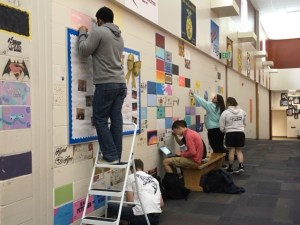
It’s only days now until graduation. The excitement in the halls of the two high schools I serve is palpable. Final exams feel like an afterthought because culminating projects, AP exams, and work/study evaluations are complete. Seniors are focused on the traditions that mark their status: Senior Breakfast, Senior Cookout, Senior Day. In the school where I taught, each senior paints a cinder block in a corridor somewhere in the building–an epitaph of sorts. Their final message to the rest of us.

My last class graduated a year ago. I miss them still. Their graduation was particularly poignant because it was the last time I knew the graduates crossing the stage, could feel I’d had a direct hand in their accomplishment. I wrote to them, just a day before the last day of school. A final message of my own, one I send out now, again to them if they are reading this, and to graduates everywhere.

Dear Graduates,

I know, I know…just one more day to go. The last few weeks went by quickly, didn’t they? That’s always the way. It seems like you’ll never reach the shore and then, suddenly, there it is in front of you, a surprise that came too fast.

That’s the way I feel, too, about your graduation. You are my very last class, and I am already bereft. I will miss you terribly–even if all we have done in glimpse each other in the halls these past few years as you have moved on from my 9th grade English class and I have stepped out of my own classroom and into the classrooms of my colleagues. But I have always known you were there. Your presence grounded me. But soon now, you will have crossed the stage and left these halls we’ve walked together.

But it is time for that. Time for you to set out on your journey. Time for you to embrace your destiny.

To that end, I am sending you a poem, a love letter really about your future wherever you sail. You will, of course, recognize Ithaka and all the allusions the poem contains. We didn’t read the Odyssey together for nothing! The last lines may be puzzling to you now, but however you interpret them, the remarkable journey, rich in adventures along the way, is what I wish for you. I am impossibly proud of you, like the proverbial button-busting parent, and I hope you will stay in touch. (You can “friend” me now, BTW.)

With best wishes, pride, joy, and love,

Mrs. P

Some of them wrote back to me, articulating the message of the poem:

-I view Ithaca not only as a place, but as a home or set of goals and opportunities…

-I have very big goals for myself…college, medical school, residency…Every day I think about them and hope that I will achieve them. This poem encourages me to believe that I can.

-I gleaned that the journey itself may be better than the intended destination…

-It may be cliche, but for me, this whole poem screamed “Life’s a journey, not a destination,” and I’ll try to remember that as I move on in life.

-When I read the “love letter,” I replaced “Ithaca” with “happiness.” It all made sense after that.

-I think that the last lines of the poem mean that if we enjoyed our journey, our destination will not be a letdown. We’ll have gained so much experience that we understand our goal, our “Ithaka,” is really a point of reference to guide us through our journey. We eventually want to arrive home, but if we constantly think about home, we’ll miss out on the lessons we can learn during the trip there. I suppose graduation is a mini-Ithaka!

-One student wrote a poem of her own, thanking me for showing her that “the path to Ithaca has not ended, but has only just begun.” She was a student in my American classroom. Now she is a citizen of the world. As are they all. May their journeys be long, full of adventure and learning, and may they reach their Ithakas, enriched and grateful for the journey.

That is how I feel about them: enriched and grateful for their presence in my life.

n.b.: If you, the reader, run your cursor over the poem, you’ll see “hot spots.” Click on those circles and see how I might have guided students through the poem had I shared it with them in class.

Thanksgiving: For My Former Students

IMG_3253

Posting this piece at Thanksgiving has become a tradition.  Once more, the holiday gives me an opportunity to say thank you to my former students. You’ve enriched my life beyond measure, and I am grateful for the time we spent together and for the contribution you are making to our community and to the world.  Was it worth it? All that time and energy and love? The answer is yes. Every single day, every single year. 

You have sold me carpet and cleaned it, accepted my dry cleaning, butchered the meat for my table, helped me find clothes in the right size,  checked out my groceries at the supermarket, and brewed coffee for me at Starbucks. I’ve regularly walked with one of you in the March for Babies, and I’ve removed my shirt in the doctor’s office so another of you could give me a shot. I’ve run into you in bookstores, grocery stores, elevators, and train stations, been in attendance with you at concerts and plays, and even been hailed on the street in a distant Western town. One of you approached me in an airport and went on to describe your work repairing the wind turbines in a county adjacent to ours.

Some of you have been wounded in war, and others of you are still serving. I’ve worried about you in Vietnam, in Iraq (I and II), in Afghanistan, and in other troubled spots around the globe. Recently, one of you died serving this country. Our whole community mourned, and that year, in your name, students at our high school collected items for Care Packages for soldiers stationed around the world.

Some of you have worked for my husband or me. One of you is a contractor who remodeled my husband’s lab; another was his lab technician. Two of you have taken care of our yard during the summer when we have been on vacation; another has walked our dogs.  You’ve waited on us in restaurants; you’ve hauled boxes for us when we remodeled.

I’ve worked with one of you on a research project and together we’ve served on the board of a community organization.

Many of you are my Facebook friends; some of you read this blog. Some of you follow me on Twitter.

You’ve substituted for me in the classroom, and a great many of you are teachers yourselves. One of you is an author and instructional coach; another, a school principal. Some of you are nurses; some doctors. At least one of you sells real estate, three at least are lawyers, and several of you are college professors. Some of you sell produce at the Farmer’s Market; others farm on a larger scale. I can count among you a writer, a chef, a veterinarian, and a musician.  A television personality and a museum director. A singer and songwriter, a pitcher for the Padres and another for the Marlins. A football player with the Packers. A videographer in Hollywood. A dancer. Several of you are pharmacists. One at least is a politician, another a personal secretary to someone in Germany. A graphic artist and a web designer, a journalist and a newspaper editor. One of you was a nun, but left your order; one is a priest who has stayed. Managers, retailers, and business owners. Police officers and fire fighters, automobile sales people and automobile mechanics. Electricians and plumbers. Receptionists and cashiers.  Peace Corps volunteers and public relations specialists. Computer programmers, technicians, and teachers. Executives and line workers. Bus drivers. Cafeteria workers. Lab assistants and physicians’ assistants. So many of you I can no longer keep you all straight.

But all of you, all day long, making the world spin round.

Teachers often wonder what becomes of their students, the youth upon whom they have lavished so much time, attention, and love. I am surprised when I list you out like this, and I see immediately what I didn’t wholly envision would happen when you were before me in my classroom year after year after year.

When I knew you, you were children. But you have grown up, evolved, moved past Crazy Hat Day, experimental make-up, video games, and babysitting. Past blue hair and nose rings, past balloons on lockers and crepe paper streamers suspended across hallways. You have come of age, turned your promise into purpose.

You haven’t all won prizes, achieved fame, or made a fortune, but you all make me proud. I had a hand in helping you learn the skills you need to keep our universe spinning. Now you help me. You ease my life, keep me safe, and bring me joy. I’ll take that.

And give thanks.

Each One Unique

Uzbek and American students
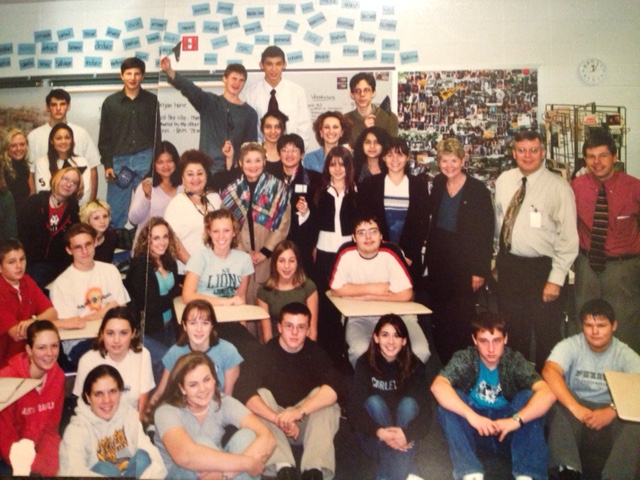
American and Uzbekistani students with their teachers at McCutcheon: November 1, 2001.

Throwback Thursday, I guess. This post is about an event that occurred in 2001 when exchange students from Uzbekistan visited my high school. I recently found this story on an old CD of Word files, and the pictures, in a box full of those I’d removed from the bulletin board when I left the classroom. I’d forgotten this story about Jason (His name has been changed), but reading it again evoked the same response I had in 2001. 

The events of 9/11 were fresh in everyone’s mind. My senior English students, mostly boys, discussed the subject whenever they could turn instruction that way.

The trouble was, only a few had had a geography course. Some had taken world history, but they couldn’t keep the stan countries straight. Who was on whose side?  What did Israel and Palestine have to do with Osama bin Laden? Was this or wasn’t this a war about religion?  My students were confused, and sometimes so was I. What disturbed me most, however, was that they were beginning to think in stereotypes.  Everyone from the Middle East and Central Asia was a mystery to them, and they lumped everyone together.

I learned that a delegation of students from Uzbekistan, traveling with their principal and teacher of English, would be visiting the nearby city high school for three weeks. I thought that a face-to-face encounter with students from that part of the world would help  students at my high school understand the rapidly unfolding world events. I hoped, too, that meeting the students from Uzbekistan would help the American students I knew to see people from other countries as individuals. Eagerly, I arranged for the group to visit my school for one day.

There were seven Uzbek students, so a fellow teacher and I chose seven American students to guide them from class to class.  They’d tour the school in the morning, visit social studies and English classes all day, eat lunch in the cafeteria, and attend a reception in the library after school.

My seniors would meet the Uzbeks in their government classes. They were excited—but they definitely had preconceived ideas, and I was dismayed by some of them. Jason, a burly giant who rarely restrained his actions or his mouth, told me flat out: “They won’t speak English, you know.  And the girls will all wear burqas.”  I tried to explain that I had met these students already.  They all spoke English very well, and none of these particular girls even wore head scarves. But Jason wouldn’t listen. He knew everything there was to know.

A traditional hat from Uzbekistan

I wondered if I was making a mistake.

The morning came—November 1—and our guests arrived, dropped off by their host families. Suddenly shy, the students didn’t want to split up. We rearranged the schedule right there in the lobby. Then Zafar was late. Could he be in a traffic snarl?  That seemed impossible here in central Indiana. Lost?  Everyone knows where our high school is located. Forty-five minutes went by. My principal called the other high school.  Zafar was in class.  He’d forgotten—which made him no different than any other teenage boy.  His American “sister” was excused from class to bring him across town to us.

The Uzbeks said little in the beginning, and our guide students were quiet, too.  We had enlisted our two Russian-speaking exchange students—from Bulgaria and Georgia—to accompany us on the tour and help us over any language barriers that did emerge.  My colleague led the way, pointing out the library, Internet labs, auditorium and stage, the gym facilities. Were the Uzbeks listening? They seemed to be hanging on what Veronika and Nodar were saying in Russian, and we weren’t sure it was just what the teacher was telling them in English.

Uzbek students in my classroom
Students from Uzbekistan attend my 9th grade class.

Two Uzbek girls and Dimitryi, a tennis player with Olympic aspirations, visited one of my 9th grade classes. The girls were shy, but we eventually drew them out. One was a model. One could speak five languages. Dimitryi practiced tennis for four hours after school. School in Uzbekistan is dismissed at 1:30, so they eat lunch at home.  They explained the symbolism of  the Uzbek flag. Uzbekistan, Dimitryi told us, had designed its flag just a decade before when it became one of the Newly Independent States of the former Soviet Union.

Seventh hour, Jason and the boys came into senior English bearing tales. Someone in one of his classes had been rude to a couple of the Uzbek girls, he said, questioning them pointedly about life “over there” and “in that place.”  I had a sinking feeling I knew who that someone was.

But the hour had epiphanies, too. Kyle said, “You know, Tashkent is a modern city. TV makes us think all those places are just deserts where everyone rides camels.”

And Rick, already enlisted in the Air Force, had seen the West Wing special that likened Muslim extremists to the KKK. We were talking about Israel and Palestine and connecting the conflict there to the apparent motives of the Al Queda. He had met several of the Uzbek students and realized that Uzbekistan was an ally of the United States. Suddenly he stood up and thrust a fist into the air. “I get it!” he burst out. “It’s all coming together!” Abruptly, he sat back down. “I learned something today,” he said with satisfaction.

Ludmila, the lead teacher, presents State Representative Sheila Klinker with a shawl from Uzbekistan.
Ludmila, the lead teacher, presents State Representative Sheila Klinker with a scarf from Uzbekistan.

I felt good, too, and the reception after school was a perfect ending. My 9th graders had assembled gift bags for our guests, decorated the library tables, and baked enough cookies to feed the whole town. Our Superintendent attended the event and so did our State Representative. Formal expressions of friendship and understanding were exchanged, and gifts were given. The icing on the cake was literally that. Our cook had prepared a sheet cake and iced it to look like the flag of Uzbekistan. Our guests were awed; they stood on chairs and photographed the cake from above before we served it to the crowd.

When the host families arrived to pick up their Uzbek teenagers, we found that several of them had left the party to attend play rehearsal in the auditorium. The next day I learned what other unscripted events had occurred. Apparently our visitors had been listening during the tour. Dimitryi had found the gymnasium. He had challenged one of the physical education teachers to a pickle ball match—and won. Several of the students had made a beeline for the Internet lab and sent messages to their friends in Uzbekistan. One had found the guidance office and gathered information on American colleges. None of them—Uzbeks or their American guides—had attended classes during the three 5th hour lunch periods.  They’d all stayed in the cafeteria to socialize. The lunch hour, one of the American students told me, was the Uzbeks’ favorite “class.”  Of course. They had never experienced the noon time social life of American students!  I had to laugh at their typical teenage behavior.  We hadn’t been able to “program” them because they were, after all, individuals.  They had their own impulses, interests, and charms—each one unique.

Obviously, the visit had been a success, but when Jason came to class the next day, I knew beyond a doubt that it had been not only a good thing, but the right thing.

“I wish I could apologize to those girls,” he said. “That was me that was rude to them.” He paused for a minute to reflect.  Then he said, without a trace of irony, “You know, they turned out to be just like us.”

That was a generalization we could live with.

National Treasure

To and for all the amazing teachers I know during this, Teacher Appreciation Week: Our world is better and our students’ lives are richer because you have been a classroom teacher. Thank you for all you do every single day.

It’s fashionable right now to blast educators, to focus on data-specific measures of effectiveness, and to prescribe corporate take-overs for failing schools. The critics say “failing schools,” but that’s code for failing teachers. The critics ought to come with me when I am in a school in my role as an instructional coach.

When I enter my colleagues’ classrooms, I am quickly swept up by the lesson—enthralled by the teacher, captivated by the content, and excited to be on the other side of the desk, learning.

In the past month, here are some of the places these fabulous teachers have taken me:

  • To Austria in 1877 when two men stole Haydn’s head from his grave for analysis by phrenologists. Indeed, pseudo-scientists found the “music bump” was significantly developed—but it was nearly another century before Haydn’s head was reunited with his body.
  • Out on the open seas with the commander of the Pequod, Captain Ahab, in mad pursuit of Moby-Dick, the great white whale who had taken his leg.
  • To a 1940s wedding, where the bride wore a dress she had made of parachute silk: the tight-fitting sleeves  were pleated at the elbow so she could move her arms, and the neckline was high, as modest as the times.
  • To Versailles with Wilson, Clemenceau, Orlando, and David Lloyd George, hammering out the Treaty that ended WWI but set the stage for so many more 20th century conflicts.
  • To the Middle East—via computer and a stunning visual from the LondonTimes—to learn about the Arab Spring.

Here are some other things I have learned—or relearned, as the case may be:

  • How to figure percents (6th grade math)
  • How to make a coiled basket (7th grade art)
  • How airbags work (a high school chemistry lesson in stoiciometry and the gas laws)
  • The seven characteristics of a folk tale (6th grade English)
  • Why artists make still life drawings—and how to do it (8th grade art)
  • How to make ice cream in a plastic bag (8th grade science)
  • How the metric system works (7th grade science) 

Over and over and over again, I am impressed by the good teaching I see—and the more I see, the more frustrated I become with the voices of people who haven’t been in a classroom in a very long time—or perhaps haven’t even taught a day in their lives. Some of the best teachers in the world are at the front of the classrooms I’ve visited.

Every good lesson has a story arc: a beginning, a middle, and an end.

Some teachers pique their students’ interest with a question: When will the force of the water from a fire hose be stronger? When it’s on the up side of the parabola or the down?

Some do it with a demonstration: An art teacher I recently watched gathered her students around her to demonstrate still life drawing. She talked out loud throughout her demo, questioning her kids about why she was doing what she was, reminding them of what they already knew, and prepping them for what they soon would do that was new.  Then they set off to do a still life on their own.

Others tell a story (like the one about Haydn’s head), or read aloud (These aren’t always English teachers—reading aloud is how the airbag class started!). They hook their kids and then jump into the lesson.

Sometimes they use “props”—like several teachers I’ve seen who have individual whiteboards for writing down answers and holding them up so the teacher can gauge the class’s understanding—or popsicle sticks and clay to make prototype chairs and tables—or crazy assortments of objects all spray-painted white (in the case of the still life drawings).  Sometimes they send students to the Internet to find a specific answer or just to find out what they can about a particular topic.

In a Family and Consumer Science class (FACS), girls AND boys were dressing models in the fashions of the decades. They were using figures and clothing that reminded me of the paper dolls I played with as a child—except that these dolls were figures on one side of a computer screen and the students “dragged and dropped” clothing from the other side onto the models, making the equivalent of dressing room changes until they had the dolls attired as they liked.

Sometimes the interactive whiteboard facilitates instruction—like the American history teacher who used it to show the students the map of Europe pre- and post-WWI—or the world history teacher who showed the class a virtual timeline of the conflicts in the Middle East.  English teachers dissect essays right before the students’ eyes or use the screen to show a timely YouTube video. 

But technology isn’t all. There are old-fashioned storytellers among us—like the teacher whose students were enthralled with the story of Wilson’s 14 Points and how the Big Four at Versailles—or the Big Three, once Orlando left—hammered out the agreement that brought an end to WWI. She captured the personalities of these four men and brought them together as if they were characters in a book—and brought the story of the Versailles Treaty to life.

A middle school world history teacher has his students capture the essence of a country’s culture in haiku; the students in a middle school English class create a collective self-portrait with “I Am From” poems.  Another English teacher directs graduating 8th graders to produce “The Soundtrack of my Life”: Each student writes about key events in his or her life and records it all on a CD. I’ve watched an extraordinary music teacher inspire her students to write essays about the reciprocal relationship between music and culture and listened as another music teacher led his students in a discussion of an NPR piece on tempo.

Sometimes, of course, the ending is a homework assignment, but in the best classrooms, that assignment is tied directly to the main idea of the day or to a point in the lesson—if it’s a two-day or three-day lesson—that will help the students transition to the next day’s focus. Sometimes homework comes in the form of a paper, a project, or a short reflection. Sometimes it’s problems to work or issues to resolve, an article to read or pieces to practice. Sometimes it’s reading on in a book, and sometimes there is no homework at all. There isn’t a formula for the ending: The teacher needs to know whether the students understood the lesson of the day and where she should pick up the next day, and there’s more than one way to find that out and move instruction forward. Sometimes closure is accomplished with those individual whiteboards or with exit passes or with questions the students submit. But there’s always a “wrap.” A good teacher doesn’t let the kids just drift out the door without a finish.

They’re ingenious, these teachers I’ve seen. They’re thoughtful, funny, clever, compassionate, kind. They challenge their students, to whom they are devoted, and they’re earnest about learning new skills and expanding their expertise. They’re dedicated to their task.  I know math teachers who are concerned about reading comprehension and differentiating instruction and collaborative learning.  I know special education teachers who attend high school workshops about strategies they’ll probably never use and courses their students will probably never take—but the teachers want to stay current with mainstream teaching.  Even veteran teachers continue to learn. The English teacher who swept me up in the story of Moby-Dick has been teaching for over 40 years—but she still comes to my after-school workshops on reading comprehension just in case I have something new to teach her

Of course there are teachers who don’t yet have all the skills they need—I wouldn’t have a job if everyone knew everything and no one needed anything.  Sure we all can learn more—none of us teaches a perfect lesson every single day.  It’s true that every field is changing and that, as a group and as individuals, we need to make changes.  The knowledge base in every field is rapidly increasing, too, and the range of skills our kids need is expanding. The technology we are privileged to use is constantly evolving.  But so many amazing educators are committed to making the necessary changes because they are committed to serving their students well. 

I wish our critics would pay attention for a change to the extraordinary teaching happening in our schools. I wish they would not lump us all together, call us collectively the equivalent of a bad apple. I wish they would recognize that educators are, quite to the contrary, our national treasure.

Two-hour Delays

For as long as big yellow school buses have transported children to school, snow days have been the students’ not-so-secret joy, their guiltless revenge on a system they can’t control: Nature is more powerful than the principal; snow keeps the teacher at bay. What kids don’t realize—at least when they’re little—is that snow days delight their teachers, too—even when it means extending classes an extra day in May.

But here in Indiana, snow days have been rare in recent years, so now we experience a not-so-secret tingle when weather that warrants at least a two-hour delay is in the forecast. A two-hour delay brings

  • An extra hour of sleep
  • An extra cup of coffee
  • Another load of laundry done
  • Bonus time for grading
  • Snuggling with our children
  • Juggling daycare
  • Remaining hopeful, even after the delay is called, that it could turn into a snow day
  • Driving to school in daylight instead of piloting through the dark
  • Dithering about whether to leave for school or stay at home
  • Treacherous driving either way
  • A parking place close to the door (if you’ve made the former choice)
  • Working in the quiet of the classroom until the students start to arrive—you could find yourself humming along with the air ducts as they fill with warm air
  • And sometimes, arriving at school at the usual hour just to discover you missed the call on the  two-hour delay

And once school does start:

  • Driving stories from excited kids who were behind the wheel on snow and ice  for the very first time
  • Adjustments to everything—the bell schedule, the cancelled Homeroom period or special appointments you might have had during your prep hour
  • Disorientation—because the bells are different
  • Speed teaching—only half an hour with each class
  • A growling stomach because lunch is at a different time
  • Feeling, at the end of the day, like you’ve run a gauntlet—because the number of human contacts, decisions to be made, problems to be solved, details to attend to don’t decrease—they just come at you faster.

But still, a two-hour delay is a break in routine, a small triumph over time. And  BONUS: no having to make it up!