National Treasure

To and for all the amazing teachers I know during this, Teacher Appreciation Week: Our world is better and our students’ lives are richer because you have been a classroom teacher. Thank you for all you do every single day.

It’s fashionable right now to blast educators, to focus on data-specific measures of effectiveness, and to prescribe corporate take-overs for failing schools. The critics say “failing schools,” but that’s code for failing teachers. The critics ought to come with me when I am in a school in my role as an instructional coach.
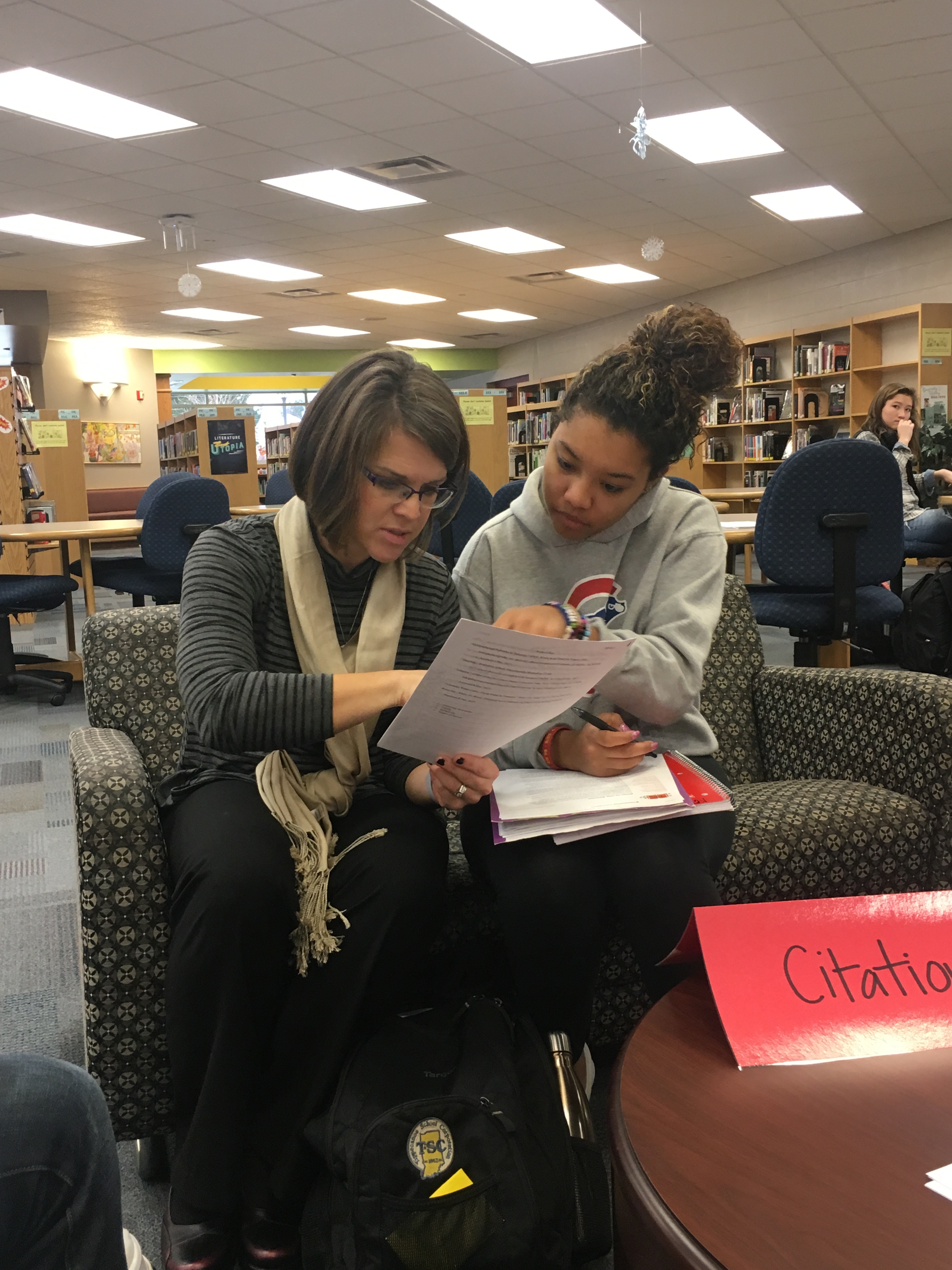
When I enter my colleagues’ classrooms, I am quickly swept up by the lesson—enthralled by the teacher, captivated by the content, and excited to be on the other side of the desk, learning.

In the past month, here are some of the places these fabulous teachers have taken me:

  • To Austria in 1877 when two men stole Haydn’s head from his grave for analysis by phrenologists. Indeed, pseudo-scientists found the “music bump” was significantly developed—but it was nearly another century before Haydn’s head was reunited with his body.
  • Out on the open seas with the commander of the Pequod, Captain Ahab, in mad pursuit of Moby-Dick, the great white whale who had taken his leg.
  • To a 1940s wedding, where the bride wore a dress she had made of parachute silk: the tight-fitting sleeves  were pleated at the elbow so she could move her arms, and the neckline was high, as modest as the times.
  • To Versailles with Wilson, Clemenceau, Orlando, and David Lloyd George, hammering out the Treaty that ended WWI but set the stage for so many more 20th century conflicts.
  • To the Middle East—via computer and a stunning visual from the LondonTimes—to learn about the Arab Spring.

Here are some other things I have learned—or relearned, as the case may be:

  • How to figure percents (6th grade math)
  • How to make a coiled basket (7th grade art)
  • How airbags work (a high school chemistry lesson in stoiciometry and the gas laws)
  • The seven characteristics of a folk tale (6th grade English)
  • Why artists make still life drawings—and how to do it (8th grade art)
  • How to make ice cream in a plastic bag (8th grade science)
  • How the metric system works (7th grade science) 
Over and over and over again, I am impressed by the good teaching I see—and the more I see, the more frustrated I become with the voices of people who haven’t been in a classroom in a very long time—or perhaps haven’t even taught a day in their lives. Some of the best teachers in the world are at the front of the classrooms I’ve visited.

Every good lesson has a story arc: a beginning, a middle, and an end.

Some teachers pique their students’ interest with a question: When will the force of the water from a fire hose be stronger? When it’s on the up side of the parabola or the down?

Some do it with a demonstration: An art teacher I recently watched gathered her students around her to demonstrate still life drawing. She talked out loud throughout her demo, questioning her kids about why she was doing what she was, reminding them of what they already knew, and prepping them for what they soon would do that was new.  Then they set off to do a still life on their own.

Others tell a story (like the one about Haydn’s head), or read aloud (These aren’t always English teachers—reading aloud is how the airbag class started!). They hook their kids and then jump into the lesson.

Sometimes they use “props”—like several teachers I’ve seen who have individual whiteboards for writing down answers and holding them up so the teacher can gauge the class’s understanding—or popsicle sticks and clay to make prototype chairs and tables—or crazy assortments of objects all spray-painted white (in the case of the still life drawings).  Sometimes they send students to the Internet to find a specific answer or just to find out what they can about a particular topic.

In a Family and Consumer Science class (FACS), girls AND boys were dressing models in the fashions of the decades. They were using figures and clothing that reminded me of the paper dolls I played with as a child—except that these dolls were figures on one side of a computer screen and the students “dragged and dropped” clothing from the other side onto the models, making the equivalent of dressing room changes until they had the dolls attired as they liked.

Sometimes the interactive whiteboard facilitates instruction—like the American history teacher who used it to show the students the map of Europe pre- and post-WWI—or the world history teacher who showed the class a virtual timeline of the conflicts in the Middle East.  English teachers dissect essays right before the students’ eyes or use the screen to show a timely YouTube video. 

But technology isn’t all. There are old-fashioned storytellers among us—like the teacher whose students were enthralled with the story of Wilson’s 14 Points and how the Big Four at Versailles—or the Big Three, once Orlando left—hammered out the agreement that brought an end to WWI. She captured the personalities of these four men and brought them together as if they were characters in a book—and brought the story of the Versailles Treaty to life.

A middle school world history teacher has his students capture the essence of a country’s culture in haiku; the students in a middle school English class create a collective self-portrait with “I Am From” poems.  Another English teacher directs graduating 8th graders to produce “The Soundtrack of my Life”: Each student writes about key events in his or her life and records it all on a CD. I’ve watched an extraordinary music teacher inspire her students to write essays about the reciprocal relationship between music and culture and listened as another music teacher led his students in a discussion of an NPR piece on tempo.

Sometimes, of course, the ending is a homework assignment, but in the best classrooms, that assignment is tied directly to the main idea of the day or to a point in the lesson—if it’s a two-day or three-day lesson—that will help the students transition to the next day’s focus. Sometimes homework comes in the form of a paper, a project, or a short reflection. Sometimes it’s problems to work or issues to resolve, an article to read or pieces to practice. Sometimes it’s reading on in a book, and sometimes there is no homework at all. There isn’t a formula for the ending: The teacher needs to know whether the students understood the lesson of the day and where she should pick up the next day, and there’s more than one way to find that out and move instruction forward. Sometimes closure is accomplished with those individual whiteboards or with exit passes or with questions the students submit. But there’s always a “wrap.” A good teacher doesn’t let the kids just drift out the door without a finish.
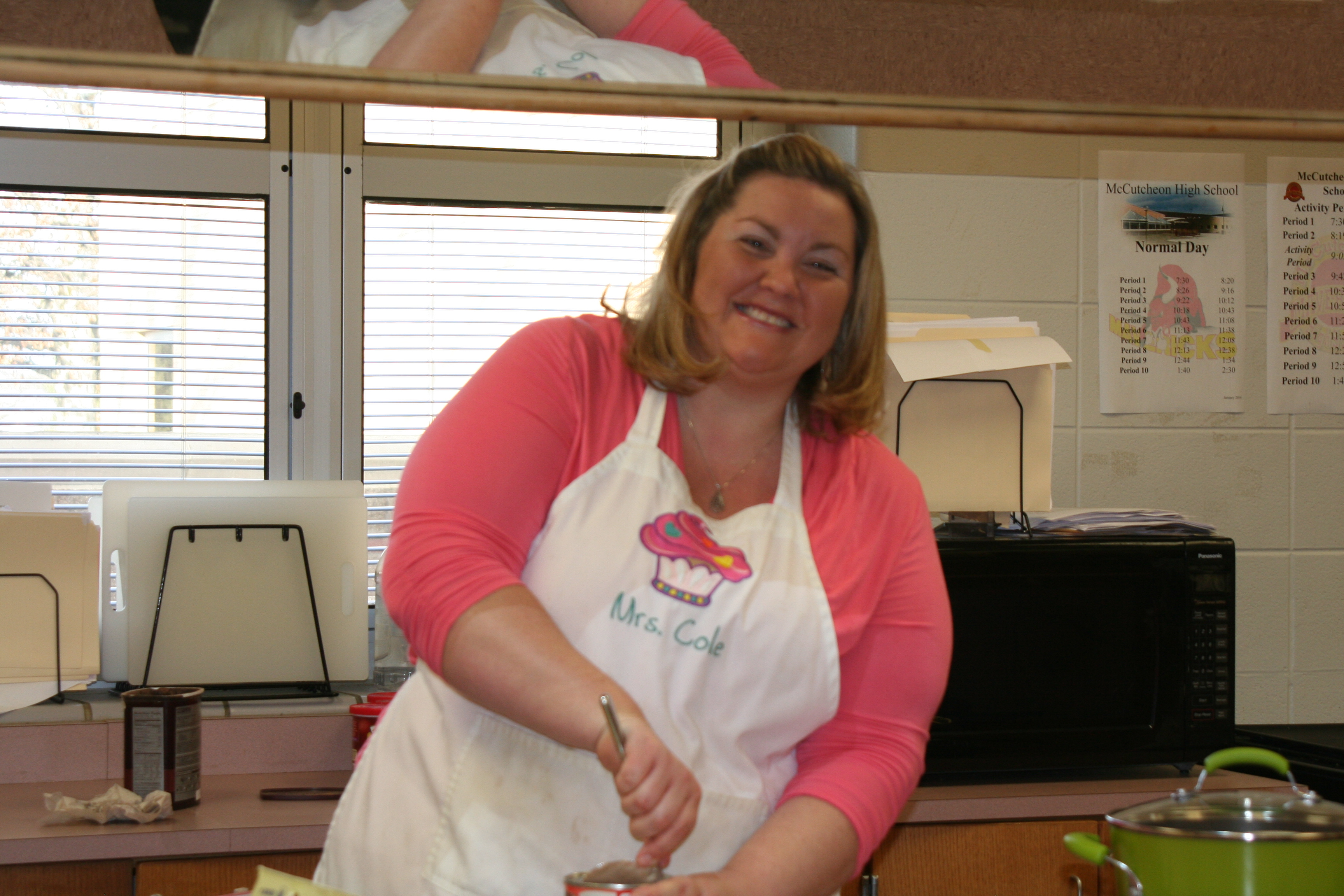
They’re ingenious, these teachers I’ve seen. They’re thoughtful, funny, clever, compassionate, kind. They challenge their students, to whom they are devoted, and they’re earnest about learning new skills and expanding their expertise. They’re dedicated to their task.  I know math teachers who are concerned about reading comprehension and differentiating instruction and collaborative learning.  I know special education teachers who attend high school workshops about strategies they’ll probably never use and courses their students will probably never take—but the teachers want to stay current with mainstream teaching.  Even veteran teachers continue to learn. The English teacher who swept me up in the story of Moby-Dick has been teaching for over 40 years—but she still comes to my after-school workshops on reading comprehension just in case I have something new to teach her

Of course there are teachers who don’t yet have all the skills they need—I wouldn’t have a job if everyone knew everything and no one needed anything.  Sure we all can learn more—none of us teaches a perfect lesson every single day.  It’s true that every field is changing and that, as a group and as individuals, we need to make changes.  The knowledge base in every field is rapidly increasing, too, and the range of skills our kids need is expanding. The technology we are privileged to use is constantly evolving.  But so many amazing educators are committed to making the necessary changes because they are committed to serving their students well. 
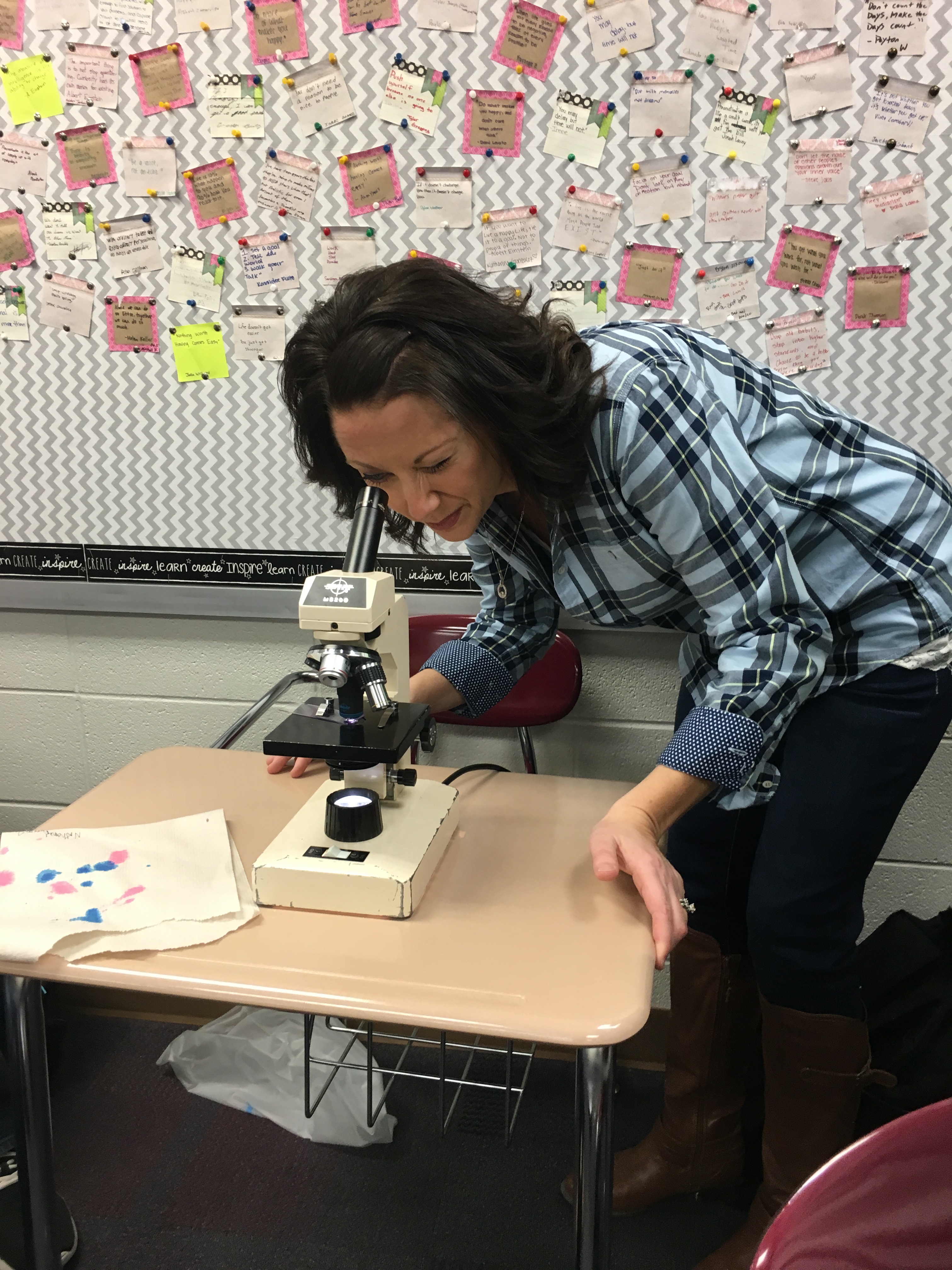
I wish our critics would pay attention for a change to the extraordinary teaching happening in our schools. I wish they would not lump us all together, call us collectively the equivalent of a bad apple. I wish they would recognize that educators are, quite to the contrary, our national treasure.

Without Words

P1040079The first student I remember coming into my class with no knowledge of English arrived in the early 1980s. I’ll call her Laila. She had recently arrived in this country, the first of her siblings to follow their father to America. He had fled Afghanistan when the Soviets invaded, coming to this country as a refugee. He was able to get protected status, a green card, and then later sign for visas for all the rest of his family. They came one-by-one or in twos, secretly, across the Khyber Pass to Pakistan and then to India where they waited until they could get passage to America.

Laila was the first of the siblings to attend school in the USA, and when I reunited with her many years later, she described for me the embarrassments, trials, and anguish of attending middle school not speaking the language. Boys snickered when she said she wanted to be a doctor, others asked her how to say dirty words in Farsi. Math class was a refuge because she could do it, and so, she said, was my room. I didn’t—and still don’t—even remember doing most of what she told me I had done. It must all have come as common sense to me, gathering material for her and making special word books. But many of the things she said I had done had made her feel included.

As I said, it must have been common sense, for I certainly knew nothing at the time about how to help English Language Learner (ELL) students. She remembered that in the spring of that 8th grade year she had to make a speech in my class. I suggested the topic “My First Month in America,” and she did speak–and the other students were enthralled–and I gave her an A and that made her day/week/month. Such a little thing. It reminds me what an impact–for good or for bad—the little things we do can have.

Lately I have been thinking about the ELL students of today; in my district, they’re mostly Spanish-speaking kids.

Other teachers think about them, too. In fact, teachers at both of the high schools where I serve as an instructional coach have approached me this year, asking what they can do to help the ELL students in their classes—especially, but not only, the ones who have little or no English at their command.

Of course they know that learning a language takes time. They know that gaining academic proficiency can take years. Of course they know there’s no magic bullet. But because they are teachers, they want to help and are frustrated when they can’t. Teachers care about their students—all of them. Still, it’s hard to imagine how you can help when you’ve got five or six classes and anywhere between 120 and 160 students and you have to prep three separate lessons every day and parents are emailing and extra-curricular responsibilities are looming and papers are piling up faster than snow melts in summer.

Yes, the students have an ELL teacher—and she works wonders. But you can only process so much a day. I remember that when I—a non-Spanish speaker—visited Peru a few years ago, I spent most of my time on the bus that carried us from place to place looking at signs and billboards, trying to memorize words.  I was learning about the culture at the same time I was learning the language, and that’s sometimes even harder—and certainly more fraught with danger—than building a word bank. By the end of the trip, 10 days later, I was thrilled when I could negotiate the purchase of a toothbrush. And that only took a few words: toothbrush and how much. What followed was some fumbling with money and help, please.

I decided to shadow some beginning ELL students for a few days and, to attempt to simulate their experience, attend their Heritage Spanish class. By the way, it’s an error to think that because these kids speak Spanish easily, they also read and write it comfortably. That’s why they take Spanish in school and get world language credit for doing so. They may have grown up speaking Spanish, but their parents may not read and write Spanish themselves and they may have passed on speaking errors, just as English-speaking parents sometimes do. (Think of kids who say “I seen it.”)

One day in December, I was able to interview several of these students. I asked the questions, a Cuban-American substitute teacher (who just happened to be in the building that day) interpreted for all of us, and my colleague (the ELL teacher) took notes so I didn’t have to.

Here’s what I learned from our Spanish-speaking ELL students, and here are the suggestions I will be passing on to content-area teachers about what they can do to help ELL students learn English and learn their content.  (And by the way, these ideas will help everyone in the room. There’s nothing strictly ELL about them.)

Greet the students at the door: Say their names, and if you know “Hello” in Spanish, say it. Pronounce their names right, though. In fact, that might be your first conversation. I remember practicing once with a girl from China. She tried to excuse me—say it didn’t matter that I kept stumbling—but I knew it did. Eventually, my tongue ceased twisting around the syllables and saying her name became as easy as saying Jack’s and Emily’s. I realized from being in classrooms all day long that a student could go through a whole school day without anyone using his name or talking to him directly. Imagine how that would feel.

To a person, every ELL student I spoke with said that the teachers who “cared” about them were the teachers they would work the hardest for. Teachers who “cared” were the ones who took the time to treat them as individuals by doing things as simple as greeting them at the door or once in a while using a Spanish word. Really.

Seating arrangements: Put them in the front. Seating an ELL student at the back makes it harder for them to see and hear. Besides, consistently seating ELL students at the back communicates to everyone else that they’re not really part of the class. Yes, they may choose to sit there—but you can un-choose that spot for them.

Let them sit together if you have more than one ELL student—if they choose to. You can’t assume they’ll be friends any more than you can assume any two other students will get along. ELL students come from all over. They’ve got class and country biases, too. They told me so. But most of the time, they’re relieved to be together because they can help each other figure out what’s going on.

When you work in groups, spread the ELL students out among the groups as soon as you sense they’re comfortable with that. If you need to keep two together, you can do that with a group of four. You might consider “Study Buddies” for those times when you give over class time for homework. Pair the ELL student with a willing English speaker who can check that something is copied down right from the board, verify pronunciation, practice vocabulary.

Those objectives of the day: We are obliged to post these every day, so I suggest using them to advantage to teach vocabulary and focus the students’ thoughts.  Print the objective in big, black letters at the front of the room. Make it visible and legible from everywhere in the room. Write it in kid-friendly language. At the beginning of the class, point to the objective and say that this is the goal for the day. At the end of the hour, return to the objective and say it was the goal of the day. This will help ELL kids catch on to the purpose of the activities you do. And it will help every other student, too.

Why black? Because red and green and other colors don’t show up on the board as well. Why print? Because cursive is harder to read—and more kids than the ELL students don’t read cursive. Really.

Make it pop: Put key words on the board or create a word wall. This was a huge aha moment for me. When I attended the Spanish Heritage class, I listened to what the teacher was saying—but I didn’t have a clue. I don’t speak Spanish. When she wrote a key word on the board, I could see that often it was a lot like English—and I caught on. I still flunked the quiz at the end of the hour, but I got the main idea.

So, point out key words or put them on a word wall and then point to them, say them out loud, tap them, throw a ball at them—anything to reinforce them for the student.

Slow down:  Everything you say, everything they hear has to pass through the translator in their heads. It takes a very long time for anyone to get past this stage. The more complex the topic, the longer the sentence, the more time it takes.

  • Slow down for directions, assignments, explanations.
  • Break lectures into segments.
  • If you can, create a PowerPoint to play behind you.
  • Create fill-in-the-blank note-taking guides.
  • Write directions out as well as giving them orally.
  • Use graphic organizers, color coding, other visual aids.
  • Call on someone in the class to paraphrase what you just said: Your words will come out in simpler language and reinforce the message for everyone.

Use checks for understanding and use them frequently: Don’t wait till the end of the lesson to ask if everyone understood, if anyone has a question. Knowing precisely where in the lesson an ENL student stopped processing will help you tailor your instruction—and it will also give you clues about how much English the student has.  Here are some easy ones to implement:

  • Thumbs up/thumbs down
  • Exit passes
  • Stop light method
  • White boards (for individuals and/or for group answers)
  • Post-it notes on the desk

Use these checks for understanding with everyone in the class—it isn’t only the ENL students who get lost.

Let them speak Spanish: They’ll switch to English as soon as they can.

  • If you have two ELL students, let them talk the lesson over in Spanish if they like.
  • If you have one who is proficient and one who is not, ask the more fluent student to translate for both of you when you talk to the beginning ELL student one-on-one. That’s going to help all three of you.
  • Don’t worry that they’re talking about you. You can tell from their tone whether they’re on task, gossiping, or being disrespectful. If they’re not on task, shut them down.
  • Use Google Translator to put your assignments, directions, worksheets, etc. into Spanish. No, the translator isn’t perfect, but it’s good enough that beginning students will get the idea. Plus, it’s another indication that you care. You might be aghast at how badly electronic translators can mangle a passage, but in the beginning, they can be a huge help. The kids told me so.

Demo, demo, demo: Make your delivery lively. Gestures, charades, pantomime, movement—all of this reinforces language. Vocal variety matters: Not being loud, but being expressive. Intonation carries meaning.

Use any Spanish you know: How about posters with words in Spanish and in English? If you speak the language, don’t be afraid to use it to help. The ELL students will begin using English as soon as they can because, like all kids, they want to fit in.

Communicate with their parents: Same as anyone. Try this website to create permission slips, thank you notes, invitations to parent conferences, pats-on-the-back notes home, etc. They print in Spanish and in English!  http://casanotes.4teachers.org

Call for help:  Spanish-speaking faculty, the ELL teacher, the ELL support staff, district level coordinators and instructional coaches will help. You just have to them know you need it.

 Above all:  Don’t give up on these kids—and encourage them not to give up on themselves. It takes time to learn a new language—but they will. Case in point:  When I found Laila again, years after she had left my classroom, she had a Ph.D. under her belt. She had become a doctor.

Give the kids time.

They’ll get there.

Call and Response

Once in a while, someone is gracious enough to invite me into their room, not to observe or to lend a hand, but to teach the class. To orchestrate the lesson. To set the purpose, plan the activity, lead the students, and make the close.  Last week, a colleague asked me to do just that. I’ve been singing ever since.

It isn’t easy for a high school teacher to surrender his or her classroom to the instructional coach. In elementary school, people come into and leave from classrooms all day long. The principal drifts in and out and is not just there for formal evaluations. Volunteer parents, reading tutors, paras, aides, and specialists of all kinds are constants in the elementary classroom background, and when someone else leads a lesson, it’s not a big deal. Kids don’t wonder why.

But in a secondary classroom, there are no reading tutors and parent volunteers. Aides are largely silent, and when the principal is present, it is almost always to conduct an evaluation. So if someone else leads the class, unless it’s a guest speaker with credentials to warrant a special presentation on the topic at hand, inquiring students are likely to wonder, “Why isn’t my teacher doing this?” Or the teacher may fear that the kids are wondering that.

It takes an unusually confident person–or a person who’s comfortable saying he or she isn’t an expert at everything–to let the coach model a strategy or demonstrate a technique.

It’s not without danger for me, either, teaching that class.  My reputation is on the line and so is my own self-esteem. The students aren’t mine. I have no relationship with them. Nothing to draw on if the lesson goes awry. No prior knowledge about their dispositions, proclivities, interests, or backgrounds. I don’t know their hot buttons or what might make them laugh or cry. I’ve got to establish credibility in the first fifteen seconds and maintain momentum for the whole fifty minutes. If it goes right, it feels at the end like a song.

Recently, I had a conversation with a singer-songwriter new to my town and at the beginning of her career. On a nippy Saturday morning, I watched her perform at our local Farmers Market. She was pounding the keyboard with gusto and singing her heart out. The people gathered around her were swaying back and forth, keeping time with their feet, nodding and bending in sync with her rhythm. It was as much fun to watch them as it was to watch her.

Afterwards, I remarked on the energy she expended, the connection she’d created, and the fun she seemed to be having. “Call and response” she said, using the term to describe the electricity between the performer and the audience–and I thought to myself then, that’s just what teaching, when it goes well, is: call and response. Like an old-time preacher and the congregation.

The lesson I taught last week was Robert Burns’ poem, “To a Mouse.” The class had just finished Of Mice and Men, and the teacher had asked me to model for the students the close reading technique I love so well, the one I call the “slow reveal,” where line-by-line the teacher guides the student from the beginning to the end of the poem, helping the students discover for themselves the gradual accumulation of meaning.

I had created a two-columned handout for the students, the poem as Burns originally wrote it and, beside it, the standard modern translation. I asked the students to skim the original first to find the line that Steinbeck was alluding to when he wrote Of Mice and Men, and then my colleague played an online recording of that original poem. They could find the line–The best laid schemes o’ mice and men/Gang aft agley–but the poem mystified almost everyone.

We dispensed with the Gaelic for the time, and worked our way through the modern version, focusing our attention on words they didn’t know– timorous, dominion, social union, ensuing–and the capitalized words–Man and Nature. I drew their attention to the two colons–a punctuation mark with authority, used twice in this poem, in both cases to announce a key idea. In the first instance:

But Mousie, you are not alone

In proving that foresight may be vain:

The best laid schemes of mice and men

Go oft astray

And  leave us nothing but grief and pain

Instead of promised joy!

More words to be sure we know: Foresight. Vain. Prospects. I hear a few gasps as students make the connection to Lennie and George and the collapse of their dream of a little plot of land where they could live and raise rabbits and live off the “fatta the lan’.”  I slip in the word allusion again and move to the turn, a word in a poem that signifies the poet is going to stand an idea on its head.

And Burns does. Nice as the connection of the penultimate stanza is to George and Lennie’s schemes gone awry, it is not all that Burns has to say. The last stanza features  another colon announcing another idea, the one that has propelled this poem about a mouse whose home has been plowed up by a farmer from the realm of simple and sweet to profound and memorable.

In this last stanza, the poet makes the distinction between Man and Nature, between the farmer and the mouse, (as Steinbeck implies centuries later, between George and Lennie): Still, you are blessed, compared with me!

What? The mouse is luckier than the man? How can that be?

I say: “See that word Still? What does it mean here?”

They say: “But.”

“Yet.”

“However.”

“Even though everything I have said is true, there’s more.”

I say: “Yes!”

Still, you are blessed, compared with me!

Only this moment touches you:

But oh! I backward cast my eye

On prospects turned to sadness!

And though forward I cannot see,

I guess and fear!

They say:

“The farmer is cursed by his memory of the past!”

“By its disappointments.”

“He fears the future!”

“He can’t see what will happen and he’s afraid.”

“The mouse lives only in the present!”

“So what do you think?” I ask. “Who is luckier? Lennie or George?  Don’t shout it out. Think before you answer. Relate your answer to the story and explain yourself.”

Hands everywhere.

“Lennie: He dies happy, looking across the water and imagining the farm.”

“Lennie: Because George has to live with what he’s done for the rest of his life.”

“George: Because at least he’s alive!”

“Lennie: Because he doesn’t experience regret. Or fear. He just thinks about those rabbits.”

Then my colleague played the recording again–the original.

But Mousie, thou art no thy lane,

In proving foresight may be vain:

The best laid schemes o’ mice an’ men

Gang aft agley,

An’ lea’e us nought but grief an’ pain,

For promis’d joy!

Still thou art blest, compared wi’ me!

The present only toucheth thee:

But och! I backward cast my e’e,

On prospects drear! An’ forward, tho’ I canna see,

I guess an’ fear!

Ah…it makes sense now. Some of the students even prefer the Gaelic. Especially Gang aft agley. Much more expressive, much more memorable than Go oft astray.

At the end of the hour, as the class was filing out, a boy approached me. He’d been too shy to speak up in class, but he was brave enough to say to me privately, “I was going to say George because Lenny has only one emotion, really. One idea. He’s limited. George can experience things. He can do new things and feel things and see color and well…learn.”

Call and response. Like a song.

Post-it Note Progress

P1030322Discovered by serendipity, the Post-it note is a staple today in offices, industries, and retail stores. According to my source, it’s one of the top five office supply items of all. FedEx leaves Post-it Notes on the door when no one is at home to receive a package. The post office uses Post-its for forwarded mail. That label across the bottom of the envelope, which sticks completely and for the full length of the paper—but can be peeled off completely as well—represents an advancement in Post-it Note technology, showing us that good ideas just get better.

Post-its are ubiquitous in classrooms, too. Every teacher I know uses them. I use them—and teach kids to use them—to

  • Substitute as a place to write margin notes in their rented textbooks
  • Write summaries (the size of the Post-It determines the length of the summary)
  • Jot down ideas or questions for discussion
  • Create temporary labels for piles of materials
  • Mark significant passages or reading progress

There are even Post-its the size of posters. Teachers without whiteboards write daily objectives on these giant Post-its, swapping them out from day to day. Groups jot their notes or their conclusions on these temporary posters and hang them on the walls to serve as speaking notes. They can leave the notes up afterward for the whole class to review.

A couple of years ago, in my capacity as an instructional coach for teachers in my district, I hit upon another use for Post-its, one that involves measuring shifts in attitude. I wanted to know, originally, where the secondary teachers I was working with stood vis-à-vis implementation of the Common Core, and then, after I had finished with my professional development presentations on the subject, whether what I’d said and had the teachers do had had an impact. I wanted to know if what I was doing was changing attitudes.

How do you measure an attitude shift?

Furthermore, I wanted to share that information with the teachers.

Instantly.

How could I do that?

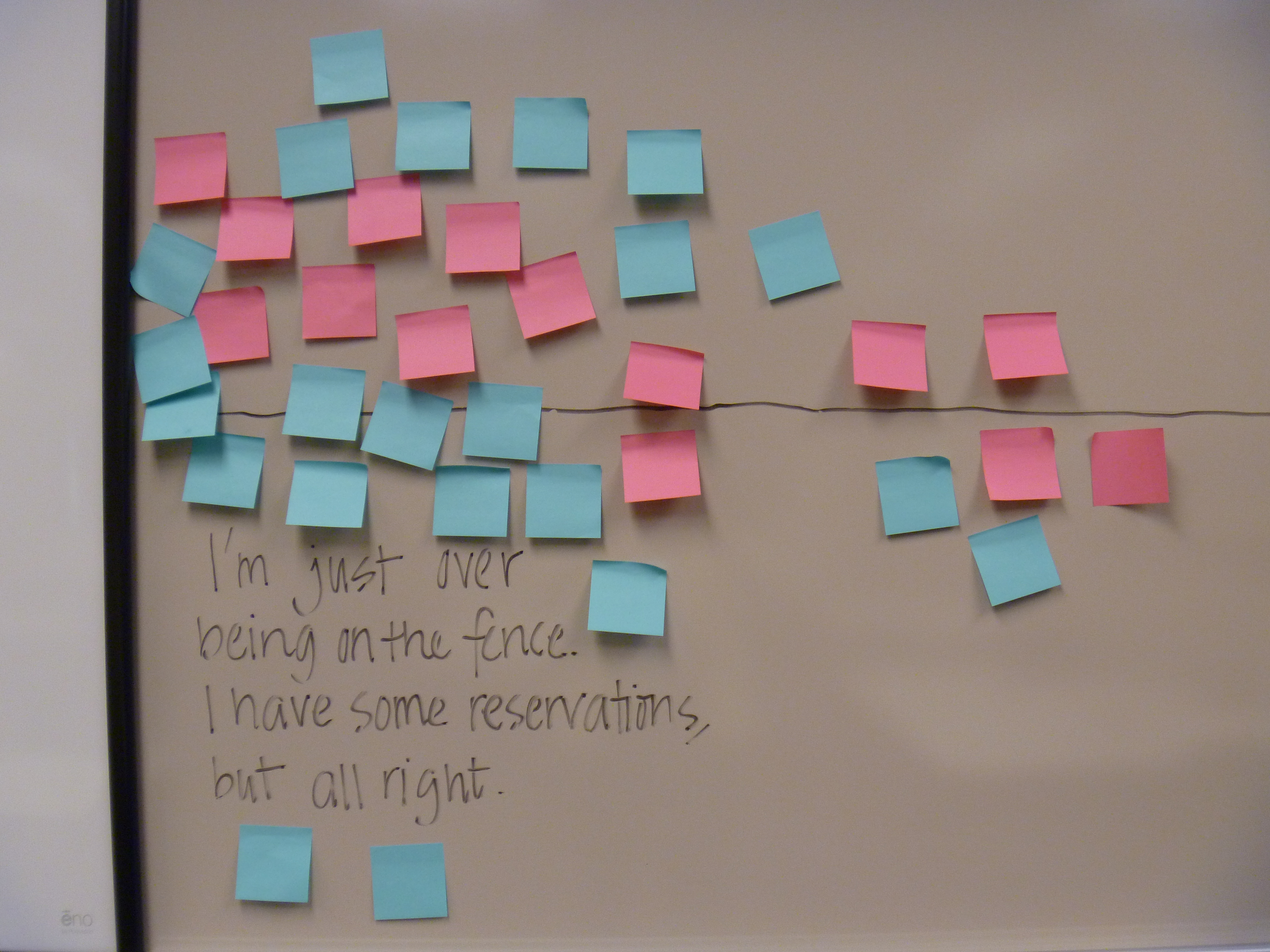
Somehow, I hit upon the idea, at the start of my Common Care presentations, of giving everyone in attendance a Post-it note (all the same color) and asking them to array their notes along a spectrum from left to right. I drew a line across the whiteboard at the front of the room and at strategic points along the line, I wrote the following summations of opinion:

  • Far Left: This is just one. more. thing.  It’s all going to go away, so why should I change?
  • Left: You’re kidding? Really? Okay, but where do I start? I’ve got a lot to learn.
  • Center: I’m on the fence.
  • Right: I’m just over being on the fence. I have some reservations, but all right.
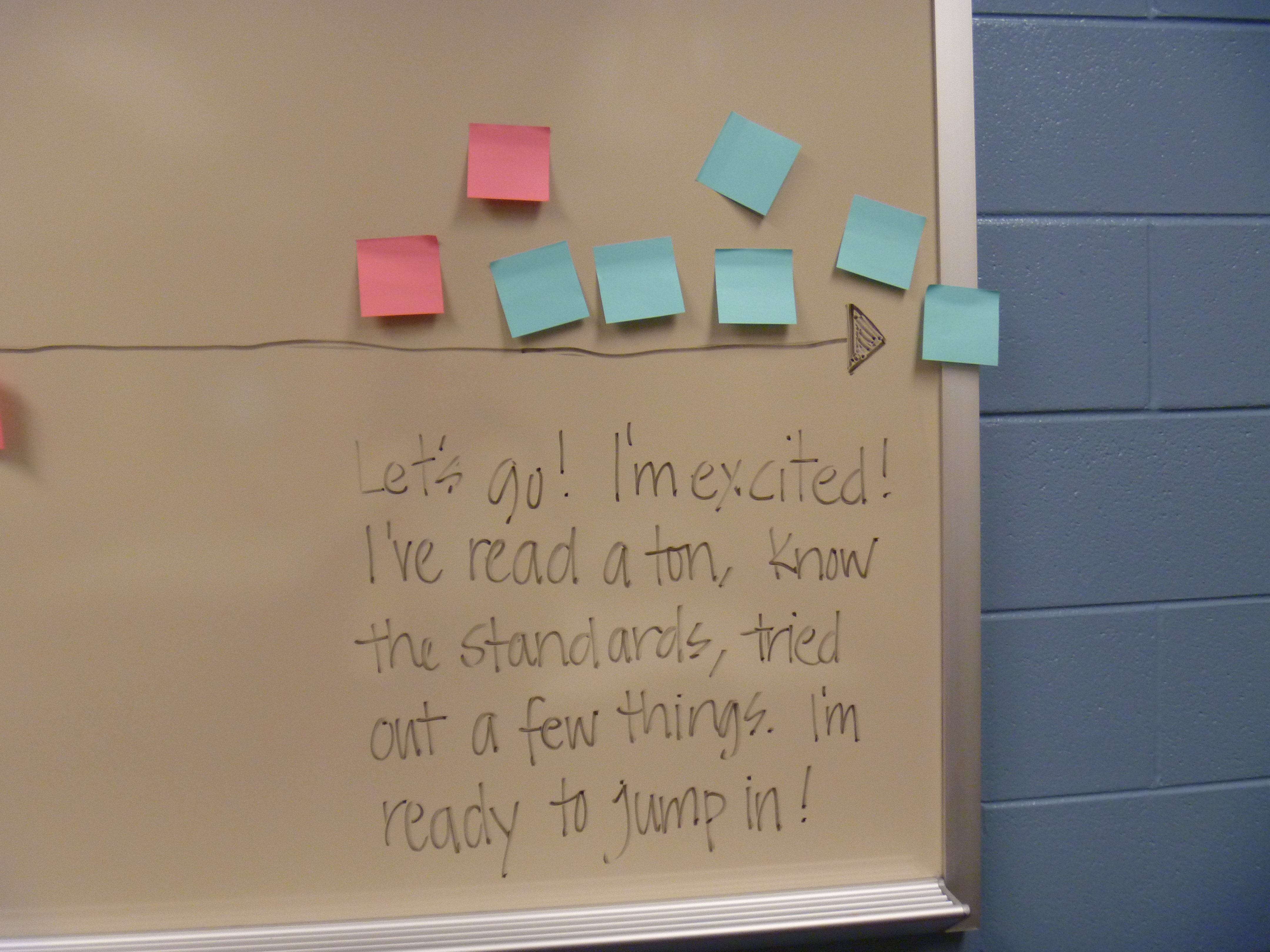
  • Far Right: Let’s go! I’m excited! I’ve read a ton, know the standards, tried out a few things. I’m ready to jump in!

The teachers had no idea that I planned to ask the same question again at the end of my sessions. They assumed my visual survey was just a way to assess prior knowledge (which it was) and take a reading on staff opinion (which it also was). They did not write their names on the Post-its and I didn’t watch while they affixed theirs to the wall.

When the workshop was finished, several hours later, I gave everyone another Post-it—this time in a different color—and asked them to do the same thing: Place their Post-it on the wall somewhere along the same spectrum. I deliberately turned my back so I couldn’t see who put theirs where.

P1030326Here’s what the Post-its revealed. (Pink is “before”; blue is “after.”) Of course, the response wasn’t universally enthusiastic—I didn’t expect that—but I was gratified to see that the overall shift was from left to right, proving, above all, that understanding something goes a long way towards supporting it. Or put another way: Education matters.

P1030328Since then, I’ve shown teachers who are trying to measure an attitude shift in their classes this same (quick and non-scientific) strategy, and it has worked for them, too.

For example, here’s one from a business teacher who wanted to know if her financial literacy course had made an impact on her students’ spending habits. She extended the concept to measure the shift in two classes simultaneously.

At the start of the term, the five points on her line were these:

  • Far left: Spend every cent I can get my hands on—and more.
  • Left: Hmmm. Maybe I should save some.
  • Center: Save half (if I can). Spend half.
  • Right: Budget for expenses. Save all I can.
  • Far Right: Invest so my money can make money.

Freeeland 2In this picture, you see the results from two classes: one pink, the other yellow.  The spread on the bottom is the beginning of the semester; the one on top, the end. Notice the movement to the right in both classes–although the two yellow Post-its on the left represent the same two students, before and after. (Ah, well. Some people never learn.)

Because these Post-its would be up on the wall for the whole semester, we both assumed students would forget where they’d placed theirs. So the teacher had her students write their names on the backs of those little pieces of paper. That way, by turning them over at the end and finding their names, the students could see how far they’d come individually. Freeland 1

This year, another colleague, a high school Spanish teacher, is going to use the strategy to measure the development of her students’ comfort level with speaking Spanish. The purpose of learning a language is to be able to communicate in that language, but developing speaking skills is usually a challenge—for both the teacher and the students. Adults (and I’m counting high school students as grown-ups here) often feel inadequate when they open their mouths to speak in a foreign language. They know the words they use are basic, and the grammatical mistakes they make are embarrassing—because they wouldn’t make those same mistakes in their native language. So my colleague and I brainstormed a long list of opportunities, first just to hear spoken Spanish outside the classroom and then to interact with fluent Spanish speakers—a list of possibilities that grows progressively more interactive and engaging as the year goes along. Of course, the activities are a requirement of the course because her hope is that through authentic speaking experiences, students will become more comfortable—and ultimately more fluent.

To measure the students’ growth, here is the continuum my colleague will use:

  • Far left: Silencio! I’m scared to open my mouth!
  • Left: I’ll speak if I have to, but I don’t like it.
  • Center: Comfortable—as long as it’s memorized conversation!
  • Right: It makes me nervous, but it’s fun at the same time!
  • Far right: I love it. I enjoy speaking Spanish!

She plans to have the students chart their progress three times during the year: in August, in January, and in May. That means three colors of Post-it Notes.

Except that a good idea just got better! Fearful that after a whole year the Post-its will lose their sticky and flutter to the floor, my colleague is going to write the attitude points on pieces of construction paper, laminate the paper, and have the students use large Avery dots (in three colors) to mark their progress.

And now I am curious: How could you use this visual survey strategy? What attitude shift would you like to measure?


Link: www.todayIfoundout.com/index.php/2011/11/post-it-notes-were-invented-by-accident/

Becoming Hemingway–or at least Improving Your Prose

P1000007A new app for writers emerged last week: the Hemingway app.

Hemingway, of course, was famous for his spare writing style: straightforward language, short sentences, action verbs, and not so many adjectives. A simple style, some say.

I have to say, the app is fun, and running a few of my own paragraphs through the program verified that doing so is a quick way to detect overuse of adverbs, instances of passive voice, and any long, confusing sentences that would be better broken apart. These are writing problems that result in convoluted sentences.

Theoretically, if you eliminate those three problems in your writing, you’ll approach Hemingway’s plain, terse style. Although there’s more to being Hemingway than that, it would be instructive and possibly amusing for students studying The Old Man and the Sea or A Farewell or Arms or any of Papa’s short stories to put their own prose through the Hemingway app’s paces.

But if your students use Word—or if you do yourself—here’s a way to use Word’s grammar checker to challenge students to improve their prose—and address more issues than the three mentioned above.

When the grammar/spell check finishes, Word reports the writer’s “stats.” Many of these counts (e.g., number of words, number of words in a sentence, number of sentences in a paragraph, number of characters in a word) can be used instructionally. For instance, you can challenge students to write longer sentences—so that average sentence length increases–or to use words with more than one syllable so that the average number of characters in a word increases.

There’s also a way to use those stats to help a student lift the entire level of the paragraph or essay he has written. The next to the last score that Word reports is the Flesch-Kincaid Readability score, a measure of the reading level of the text. You do have to caution students about this score. The Flesch-Kincaid score is the reading level of their writing, so a Flesch-Kincaid score of 4.5 means that a fourth grader in the middle of the year could read and understand what has been written, not that the student is writing “like a 4th grader.” (You also have to caution them not to take the score too seriously.)

The Flesch-Kincaid Reading Ease score is a variation on this theme. A slightly different score, the Reading Ease number indicates just how comfortably the text can be read. The higher the number, the easier the text supposedly is. Secondary students shouldn’t aim for 90, though, because then their writing would be suitable for small children. The easy reading range for 13-15-year-olds is 60-70, according to Flesch-Kincaid.

To begin, you’ll need to enable the readability statistics reporting function on Word’s grammar checker.
File > Options > Proofing
• Check the box that says “Show Readability Statistics.”
• Just below that box, a drop-down menu says ” Grammar.” Change that to “Grammar and Style.” (The grammar checker will be much more useful overall if “Grammar and Style” is the default.)
• Click “OK.”

If you have emphasized some specific writing strategies in your instruction—like sentence combining or the use of transition words—you can challenge your students to apply those strategies to their own writing. These instructional strategies are, in my experience, the most effective ones for elevating the reading level of a piece of writing using Word’s grammar checker:
• Combining sentences with coordinating conjunctions (i.e, creating compound sentences)
• Combining sentences using semi-colons
• Using colons correctly
• Combining sentences with subordinating conjunctions (i.e., creating complex sentences)
• Adding transition words and phrases
• Adding adjectives and otherwise elaborating
• Using words of more than one syllable

What follows is a series of paragraph revisions. The original paragraph was one I fabricated, but you could use a real student’s work to demonstrate this revision method for your students—or try this out with something you’ve written. The number at the end of each paragraph revision is the Flesch-Kincaid readability score for that rendition):

My name is Jose Carter. I am in 7th grade. I like to play football. I like to play basketball. I do not like baseball, though. It is too slow for me. I also like fast cars. I have three sisters. They can be real pains sometimes but sometimes they are a lot of fun. We have a good time during Christmas vacation. We live in a house on a big hill so we slide on the hill a lot. We also have a pond on our property. We go ice-skating whenever the pond is frozen. 2.1

My name is Jose Carter. I am in 7th grade. I like to play football and basketball, but I do not like baseball. It is too slow. As you can imagine, I also like fast cars. I have three sisters who can be real pains sometimes, but sometimes they are a lot of fun. For example, we have a good time during Christmas vacation. Since we live in a house on a big hill, we go sledding whenever there is enough snow. We also have a pond on our property, so we go ice-skating whenever the pond is frozen. 3.2

Hello! I am Jose Carter, a 7th grader at Any Middle School where I am on the football and basketball teams. I do not play baseball, though, because it is a slow sport, and I like speed. As you can imagine, I also like fast cars. Maybe that is why I enjoy sledding down the big hill on our property during Christmas vacation so much. When there is snow, my three sisters (who can be real pains sometimes) and I enjoy this activity very much. We also like ice-skating, which we also do whenever the pond on our property is frozen. 4.3

Let me introduce myself: I am Jose Carter, also known as “Speedy.” I am a 7th grader at Any Middle School and a proud member of the football and basketball teams. I have considered playing on the baseball team, too, but I really do not enjoy that sport because it is so slow-moving. You can probably tell from reading this that I like speed, and thus, as you can imagine, I also like fast cars. Maybe that is why I enjoy sledding down the big hill on our property during Christmas vacation so much. When there is enough snow, my three sisters and I, through repetitive runs down that hill, are able to create a thrillingly slick track. We also enjoy ice-skating on the pond on our property; once again, we carefully groom the ice so that it remains slick and we can travel fast across the frozen surface. 5.2

Using the grammar checker to improve writing can go beyond just checking for spelling errors, comma usage, capital letters, and subject-verb agreement problems. Some students will rise to the challenge of using it to revise their sentences, and they’ll make multiple revisions. But even reluctant revisionists will see improvement in their writing with just one or two attempts.

The grammar checker won’t cure everything—no more than the Hemingway app will turn our students into Hemingway—but such programs have the appeal of games, and a lot of kids like that.

Give it a shot yourself.

From Paragraph to Essay

ry=400For some students, producing a paragraph of writing is a struggle—for the student and the teacher. The mere mention of essay writing so overwhelms these students that they won’t even start. For teachers, essay writing inevitably means hours of work at night and on the weekends. And if the writing isn’t particularly engaging, that work can be drudgery.

One way to get those pens moving or fingers typing is what one of my favorite writers, Anne Lamott, calls the “bird-by-bird” strategy.  I call it the “Piecemeal Method.” The students write the essay one paragraph at a time, and the teacher responds to it in the same way. It’s easy on both parties.

On Monday, after a prewriting warm-up, I have the students write the first paragraph, the introduction. And believe me, when I say “warm-up,” I mean both their warming up to the idea of writing as much as I mean any prewriting strategy I might use (like making lists, webbing, outlining, etc.).

I give each student a folder for their pre-writing ideas and then collect the folders along with the introductions. Many times, students who are challenged to write essays are the same ones who stuff loose papers into their notebooks, tuck English work into science texts, or lose their work in the recesses of their lockers. I solve that problem by keeping the folders in the room.

That night, I read the introductions, making whatever corrections or suggestions for revision I think are necessary on the papers. I hand the introductions back on Tuesday along with the folders.

Then I have the students write the first support paragraph. I collect the lot, read them that night and make my marks, and return them all the next day.

On Wednesday,  the students write the second support paragraph. Once again, I collect their work, and before I even go home from school, I go through those paragraphs, making my corrections. It’s relatively easy to read a stack of paragraphs, I have found, whereas reading a whole stack of essays is daunting. Teachers aren’t any different from students!

I repeat the process on Thursday for the last paragraph of support, and on Friday, the students write their conclusions. On the following Monday, when I hand back the conclusions and the folders, students will have an entire essay.

Now they can rewrite their essays, in ink or at the computer, making the corrections and revisions I suggested along the way. If they’re homework-averse individuals (and most are these days!), I can set aside class time for this final draft.

Of course, I could go farther before they make their last revisions.  I could present a mini-lesson on transitions and ask the students to use words like first, second, third (for beginners) or later, while, since, occasionally, moreover, consequently and so forth (for more experienced writers) between paragraphs. I could teach them how to use Word’s grammar checker if they don’t already know. I could work on identifying weak or clichéd words and expressions and replacing the limp language with strong action verbs, vivid adjectives, and specific nouns. I could do a review on semi-colons, for example, and ask them to find a couple of places in their essays where they could use a semicolon instead of a comma and a coordinating conjunction. I can’t—and shouldn’t—do it all. “All” will overwhelm the students, and they’re bored with the topic by this time anyway. I choose what seems most important for them to learn or do–and that can vary from year to year and from class to class. And, if the needs aren’t universal, I can differentiate by focusing on the different challenges of individuals or groups of kids.

The grading rubric I construct is simple. I might score for organization, length, grammar and punctuation, sentence structure. The kids usually do well, now that they’ve had a chance to revise. I’ve already marked the paper for surface error, made suggestions for elaboration, crossed out redundancies, suggested places where they could combine sentences, and facilitated improvement in any number of other ways.

As long as they’ve written a paragraph a day, the chances are good that most of the papers will meet my standard for organization and length. The same with grammar and punctuation. It’s likely that the most egregious mechanical errors have been eliminated, thanks to the pre-assessment suggestions I made and the grammar checker the students utilized at the end. Sentence structure may be a place some students will fall short, but overall, they won’t do badly.

This is a “feel good” approach to writing an essay, and it works with middle-schoolers who are just learning the structure of a five-paragraph theme and seniors who are still dragging their heels about writing anything. It isn’t going to elicit charming, eloquent, or fluid writing, but it will produce serviceable prose. Students will score better than average for a change and feel good about their ability to produce a lengthy piece of writing.

And I’ve graded it all in less time than usual (or it will feel like less time!) and ended up with better results. A win-win for everyone!

Break It Down: Scaffolding Style

All right.  The kids “got it.” They saw that Capote has a distinct writing style and that his style has something to do with lists and parenthetical remarks and sensory detail.  Is that all they’re expected to know? That the author—any author—has a style?  Or do I want more?

Of course I want more.

I want my students to recognize what style is and be able to articulate the stylistic elements in any author’s work.  I want them to distinguish one author’s style from another’s and describe the differences using the appropriate language.  What I want is analysis: a higher level thinking skill. Not so easy as simply recognizing the author has a style or that there are differences in writers’ styles.

It’s a skill that has to be taught—and in the beginning, students will benefit from some “scaffolding.”

So, once they’re “hooked” (See my blog post “A Matter of Style”), I provide my students with a checklist prepared by teachers at a school in Seattle, Washington—the Lakeside School—called Checklist: Elements of Literary Style. Yes, I thieved it. (I prefer to say “borrowed.”  After all, when people put items on the Internet, it’s an invitation for others to use them, not unlike the teacher down the hall pulling something from her file cabinet and saying, “Try this!”) I noticed, when I searched online again for the checklist, for this blog, that another teacher has borrowed it, too. Like me, she gives credit where credit is due.  Frankly, it would be hard to improve upon this checklist, so thank you, English teachers at the Lakeside School!

Pause now to go to this site:

http://teachers.lakesideschool.org/us/english/ErikChristensen/WRITING%20STRATEGIES/LiteraryStyles.htm

I also provide the students with a handout (below) that can be simplified by including fewer categories, depending upon the age and stage of the students or the characteristics of the particular author whose style they are analyzing, or by combining two categories (like #3 and #4):

Element of Style Example or explanation
1. Sentence structure
2. Pace
3. Diction
4. Vocabulary
5. Figures of speech
6. Use of Dialogue
7. Point of View
8. Character development
9. Tone
10. Word Color/Sound
11. Paragraph/Chapter Structure
12. Time Sequence
13. Allusions
14.  Experimentation
15.   Metafictional techniques

The students’ task—independently, in pairs, or in small groups, depending again upon all the variables of instructional planning and strategy—is  to examine the designated writer’s work—and find examples in the text of each of the elements on the checklist—if they apply.

For example, students will note that the sentences in “A Christmas Memory” are long (#1), full of lists and adjectives and subordinate clauses. The pace (#2) is slow, with much description—sensory images like the stove, the tipsy dancing in the kitchen, the tinfoil stars ornamenting the trees—and emphasis on the setting (the South—pecans, pine trees; and the Depression—FDR was the President, it cost a dime to attend a movie).  His diction (#3) is expansive—he’s long-winded and that contributes to the affectionate feeling he has for Sook and his lingering description of these Christmas memories. His vocabulary (#4) includes some unusual and/or multisyllabic words—for example, inaugurated, dilapidated, mingle, sacrilegious, skinflint, prosaic—but these alternate with simple words that describe images and scenes that are easy to understand and with figures of speech (#5) such as like a drunkard’s legs, blaze of her heart, turned our purse inside out that are easy to visualize. There is not much dialogue (#6), but lines such as “It’s fruitcake weather!” move the story along and signal significance.

And so on.

More sophisticated students might write for Truman Capote that his portrait of Sook (#8) is almost a caricature of an eccentric and solitary older woman, perhaps a simple-minded one, but by inserting his own parenthetical comments (#15), he not only softens our judgment but endears her to us.

The checklist provides a scaffold for students when they attempt to describe style.  It’s  a difficult literary concept—more difficult by far than outlining the plot or figuring out point of view or even determining theme—so the checklist and companion worksheet break the task up into manageable pieces.

Done often enough, the exercise will help students develop their understanding of what style is and, with practice, come to identify its characteristics with the same automaticity with which they identify the stages in plot development or analyze character.

Furthermore, the language of the checklist plus the examples they find in the text will provide the students with the support they need when their teacher—could that be me?—asks them to write a formal analysis of an author’s style.

Whatever the skill you want students to learn, break it down, break it apart. Make the goal attainable.

How to Use an Instructional Coach

Athletes—including the very best—use coaches regularly to improve their performance. Surgeons bring coaches into the operating room to observe them as they work and make suggestions for perfecting their technique. Social service agencies employ coaches to help caseworkers develop communication skills, especially with difficult clientele. In  schools, coaches serve a variety of purposes.

Sometimes we are called literacy coaches. In that case, we work with teachers to develop instructional strategies vis-a-vis reading and writing in all the disciplines. Sometimes we are called curriculum coaches, and then the focus is on the district’s learning goals and standardized assessments of those goals.  We might be called technology coaches—where the emphasis is on the obvious. Or, we are called instructional coaches—and then it’s all about what happens in the classroom. The truth is, most of us do some of all of this. The name doesn’t matter. We know what we do, and what we can do.

But often, the classroom teacher isn’t certain what our role is or could be. Coaching is still relatively new and teachers aren’t used to built-in support systems.

The last time most of us had any help in the classroom was during our student teaching experience. For  some, that may not have been a productive experience. Whether the student teacher is cut loose and expected to sink or swim or guided skillfully in an orchestrated co-teaching environment—or experiences something in between—the fact is, the status of a student teacher is just that: student. Novice, beginner, apprentice, neophyte. The relationship is unbalanced: The cooperating teacher is the old pro, and the student teacher is the greenhorn. The one tells the other what to do.

The relationship between a teacher and an instructional coach is much different. The coach is a colleague and a peer. The teacher is a professional and an equal. It’s the teacher’s classroom, not the coach’s, and the coach is invited to interact. By the teacher.

Oh, sure, sometimes the principal has expectations that his or her staff will use the coach, and sometimes the principal is even more directive than that, but in the end, the teacher invites the coach into the room and into the relationship.

But what can a teacher ask a coach to do?

To answer that question, I thought about how I would have used me at various times during my career.

In the beginning, I sure could have used help organizing my classroom. It took me a long time to develop systems for collecting papers, storing them, returning them. I needed a template for putting assignments on the board and a system for conveying missed information and assigning make-up work to kids who were absent. I even needed help with room arrangements. I didn’t have the backlog of experience that would have told me how to break up cliques without making kids mad and how to move a student’s seat without giving him (or her) an audience.

At the start of my career, I could have used a coach to help me put a lesson together.  I’d have an idea of what I wanted to communicate, but I didn’t have a repertoire of activities to draw upon. I could have used someone simply to help me plan a lesson, a week of instruction, a whole unit. To help me see the flow of instruction over a semester’s time. To set goals. To develop activities to communicate those goals. To plan tests to measure how well the students had learned. Really. None of that came easily in the beginning.

I could have benefitted from having a coach watch me teach and make suggestions about pacing, about questioning techniques, about checking for understanding. It’s true that I figured things out on my own—eventually—but a good coach could have kick-started that process and made me a better teacher, faster.

Shoot. I could have used a coach’s help in planning and delivering lessons right up to the end of my time in the classroom. Not because I was bad, but because I wanted to be better.

As time went along and I grew more comfortable with planning and delivery, I could have used an extra set of eyes—not on me, but on the kids. Someone to watch social interactions–in some cases, to identify the primary troublemaker. I remember the frustration of knowing a group of kids was cutting up when my back was turned—but turning in time to see only the last participant, not the instigator. I could have used an extra set of ears: Someone to listen for the under-the-breath remark that would tell me a student didn’t understand but wouldn’t ask a question. So many times I could have used an extra set of hands. Whenever I put kids in groups, whenever I wanted to conference with students individually, whenever I set up learning stations, another teacher in the room would have been a boon.

And I could have used a shoulder to cry on. The relationship with a coach is a confidential one. We listen. We don’t take sides. If we can, we offer suggestions.

I would have loved, loved, loved to co-teach with a coach. Once, I had a paraprofessional in my classroom who was more like a co-teacher than an aide for one of my students. We dialogued about content with the kids as our audience—delivered a relaxed, two-person lecture, really. Other times, she’d ask a question that would prompt me to clarify a point. Once we even planned a tag-team presentation. Now that I’ve been a coach and had the opportunity to co-teach with colleagues, I know I would do it myself whenever I could. Sure, it takes planning—you have to meet and discuss the objectives, plan the activities and decide who’s going to do what, figure out how to assess what the students have learned—but you have to do that anyway. It’s more productive with a colleague because two heads on a topic are usually better than one—brainstorming and piggybacking on each other’s ideas usually yields rich discussion in the classroom. The same is true with lesson planning.

Co-teaching would have built my confidence when I was a novice, but I would have thrived on it as a veteran.

I could have used someone to help me make sense of standardized test data. Someone to research topics for me. Someone to look for alternative titles for theme-based units.

In short, a coach’s job is to make a teacher’s job easier. Whether that is doing research, co-teaching a lesson, refining a strategy, figuring out technology, solving a problem, or working with kids, coaches are there to help.

We don’t have all the answers—but we do have the time to find answers to yours. We’re not outside experts, not even consultants. We’re teachers—just like you—but teachers without our own classrooms. Invite us into yours.

Why No I

Since they’ve been in middle school, the kids I’ve taught have complained about having to follow the rules of rhetorical writing— particularly the rule about not using the first person.

Of course, they “know” why. Their English teachers all along have adhered to the formal writing conventions (abbreviated by us as FWC and used as shorthand on their essays to point out such slips as the use of contractions, or the appearance of digits instead of words for numbers under 100, and yes, ironically, for the use of abbreviations). “I” isn’t appropriate, we tell them, because this is formal writing. (And yes, they get plenty of chances to write narratives and stories and other sorts of essays where a more casual tone is perfectly appropriate.)

Like they would understand what we meant. I used to make an analogy with dress: You wouldn’t wear a sundress to a funeral or a leotard to the prom, I’d say. But times have changed, and I’ve seen worse at both venues. So the old analogies no longer hold. In my later years in the classroom, I had to find a new way to make the point that the more distance between the writer and the audience, the weightier the writing occasion, the more formal the style. Your college professor—or the reader of a scientific article—isn’t your best buddy, I’d say. Don’t call him by his first name and don’t inject yourself into the conversation.

In talking over the content and the intent of the Academic English 12 course we have always called (rightly or wrongly) College Composition, my colleague in the English Department at my former high school revealed that her students were making the same complaints mine always had: Why can’t we use “I”?  These students aren’t middle schoolers. They’re, in fact, old enough (some would say, beyond old enough) to think seriously about levels of diction. I described the lesson I had developed towards the end of my time in the classroom to address this topic, and she invited me to try it out with her students.

I was so excited to be back at the front of the room that I showed up 24 hours early.

We had planned the lesson together. She’d locate a copy of the children’s story The Three Little Pigs and read it aloud to the students. The lesson depended upon their all recalling the plot line.

I started the class by reminding the students of the various conventions they observe in life:

  • Going up the staircase: Up on the right, down on the left
  • Setting the table: Glasses are placed on the right, above the knife
  • Driving: Passing on the right on the road (in the USA)
  • Airline boarding: By zone—unless it’s Southwest and then it’s by number
  • Attire: Hats off inside–except on Spirit Days

When I asked why we have conventions, one boy’s hand shot up: “To make things go smoother!” So right. So that everyone knows what to do. So that everyone is on the same wave length. Various kinds of writing follow certain conventions, too, I reminded them, and they remembered: FWC.

My colleague stepped in then and read The Three Little Pigs aloud, just as a teacher would in elementary school. In this particular version, the first two pigs were eaten—a violent rendition, the kids exclaimed—but reading it aloud was critical, and the pigs demise made for humor later on.

Then we divided the class into six groups and handed each group a card. We did do a little staging, as teachers often do to be sure a lesson goes well. One student we knew to have a particularly droll sense of humor we placed in the Facebook group—we knew he would write in that style without inhibition.  Another we put in the Twitter group because he knew its conventions. Finally, we placed a particular girl—one I’d had in 9th grade—in the “scholarly” group because we knew she’d take the assignment seriously. We wanted the kids to enjoy the activity, but we also wanted them to take the lesson where we were headed.

The directions to the six groups all involved summarizing the story of The Three Little Pigs:

  • Retell the story as a plot summary for a formal writing assignment (for say, Academic English 12).
  • Retell the story as an email to Grandma from an elementary student.
  • Retell the story as a student in the hallway would tell it to prep another student who hadn’t read the assignment before class.
  • Retell the story as a series of text messages between the pigs and the wolf. Be sure to write as if these were real text messages.
  • Retell the story as it would unfold on Facebook, starting with a status update by one of the pigs…be sure to write the way people write on Facebook!
  • Retell the story as a “Tweet”: no more than 140 characters.

The students composed their answers on their computers and sent them electronically to their teacher, who compiled them and projected the collection onto the ENO board. One student from each group read the group’s submission aloud. The class had no trouble identifying the style of each rendition. I was especially impressed when one boy said of the conversation in the hallway, “That sounds like a speech, not a written account.”

Here’s what they wrote, just as they wrote it:

1. Plot summary for the English teacher:

2 Slices of Bacon and Wolf Stew

In the Story “The Three Little pigs” there are three young pigs trying to build themselves each their own home. The first little pig buys straw to build his humble abode. However, a hungry wolf comes along and blows his house in. That poor little pig did not survive. The second pig buys twigs to construct his home out of. Sadly, that same wolf finds him as well, and the second pig does not make it either. The third pig uses his intelligence and buys bricks to design a sturdy home for himself. When the wolf comes he is unable to blow in his house. The wolf then attempts to climb down the chimney into the house. However the little pig using his clever wits out smarts the wolf by placing a pot of boiling water in the chimney. The third little pigs goes on to live happily ever after.

N.B.: The class suggested that a revision opportunity should be offered to this group.

2. Letter to Grandma:

Deer GramGram,

How are you doing? Third grade is going good. Mrs. Ruiz red The 3 Little Pigs today. I did not like the story. There were 3 bruther pigs. The first bruther made a hous. His hous was made out of straw. Then there was a wolf. The wolf wanted to get in the hous but the pig said no. The wolf blew his straw hous down and ate the pig. I was sad. : (. Then the second bruther made a hous. He made his hous out of sticks. The wolf wanted to come inside but the pig said no. So the wolf blew the hous over and ate the other bruther. I was really really sad GramGram : (. Then there was 1 mor bruther. He made his hous out of briks. His hous was really realy strong. The wolf wanted in but the pig said no. The wolf tried blowing it over and going thru the roof but the pig catched the wolf and he died. I was really really happy!!!!i cant really blame the wolf tho i like bacon two.

Love,

Your favorite grand dauter

3. Cramming in the hallway:

Ok so there was 3 pigs. They left their mom’s house because they needed to make their own lives. Then each pig build their own house out of straw, twigs, and bricks. A hungry wolf blew down the first two houses of straw and twigs then ate the pigs. When he came to the last house, the wolf couldn’t blow down the house of bricks. He went down the chimney in order to eat the last pig. He landed in a pot of boiling water and died. The last pig lived happily ever after.

4. Texts:

Conversation One:

Wolf: Hey what’s up my lil round friend?

Pig: Shut up I hate everything about you, fool.

Wolf: Ok now I’m kind of ticked off. I’m blowing your house to the ground like a little bubble. So get out.

Pig: Haha you must be trippin’ bro. I’m not gonna move.

Wolf: You are obviously oblivious to the situation at hand, my friend.

Pig: Aye bro, idk what u trying to say… u r stupid.

Wolf: (blow) Now you’re the fool.

Pig: OMG you eating me hurts so bad.

Wolf: LOL

Conversation two:

Wolf: Hey man, how’s it goin?

Pig: Wut do u want?

Wolf: Man, I’m just trying to have a conversation

Pig: Nah, I’m not about that life

Wolf: Are you about this life? (blows house down and eats pig)

Pig: Stop, man!

Wolf: LOL

Conversation three:

Wolf: Aye pork chop, let me in dat house

Pig: I ain’t eva goin, not by the hurrrr on my chiny chiny chin

Wolf: nu uh, ill blow dat young house down (tries to blow house down)

Pig: I told you I aint eva goin.  Man I’m too nice.

Wolf: Commin in hot! (goes down chimney)

Pig: You a gonna. (traps wolf in pot

5. Facebook

Pig 1: “OMG, h8 my mom soooooooooooooooooooooooooooo much right now. I cant believe she thinks she can tell me what to do. Like if you love jesus ❤ #worst #life #ever #hashtag”

It’s the Word: “Aww bb whats wrong :C”

Pig 2:  “Mom totes just dumped us on the streets, like wtf”

Merchant: “Hey, I can offer some stuff for you guys to build your own houses. Sound good?”

Wolf: “dont bother with these pigs, they are too wimpy to build there own houses. XP”

Pig 1: “thats not what ur mom said last night. #BURN”

Wolf: “Its go time! Lets fight!”

Pig 2: “Well take u on any time”

Pig 3: “I’ll take 300 tons of brick for my house, please.”

Wolf: “LOL JUST ATE UR BROS. UR NEXT #Bacon #porkchopped”

Pig 3: “Dude…….come at me bro.”

Pig 3: “Talk about a sick burn.”

6. Twitter:

Three little pigs are down to one and the big bad wolf is cooking in the pot #yolo #sad #funny #nomnomnom @3lilpigs @BIGbadWOLF

When the laughter subsided, it didn’t take but a minute for the students to draw the conclusions we hoped for.

“So what’s the point?” I asked. “What made the difference?  I can think of at least three things.”

“The audience!” several shouted out immediately.

“The tone!” said another, meaning the tone of the medium itself. I agreed with her: Facebook has a certain tone, and you wouldn’t take that tone with your grandmother or your English teacher.

And finally, with a little pantomiming—my two hands moving farther apart as I ticked through the list from Twitter to the English teacher summary—psychological distance. They got it. Your teacher is an authority—and the grader, they reminded me—and you better not presume to be her buddy.

I rode high on that lesson for a week. And so did my colleague. She reported—a week later—that the kids really had understood the message.

We’re going to do it again next semester, reversing roles this time.

I can’t wait. I’ll probably show up 24 hours early once again.

A Six-Box Year

The principal at the middle school where I spent yesterday morning brought donuts for his 35 teachers to mark the approaching end to the school year.

The size of the donut array took me by surprise. Apparently, the teacher standing beside me was surprised, too.

“It’s a six-box day!” she exclaimed.

A celebration!

For teachers, the end of the year brings celebration, but it brings emotional overload, too.

There are the usual worries over final exams, the routine but nonetheless draining dismantling of classrooms, the extra stress of tying up myriad loose ends, and lots of anxiety about the first year of the new evaluation system we’ve all been through.

There’s the excitement of culminating projects—the videos, the newscasts, the high-spirited presentations in front of the class–and celebrations, like the ice cream sundae fest that I just witnessed in the school library for the kids who read 20 books in a semester.  Awards ceremonies,  talent shows,  and field days, even—in one school I visit—a field trip after school is over!

There’s saying goodbye to students whom teachers have come to love—or even just learned to tolerate—and that brings another emotional reality.  In a way, teachers are preparing for the grief they’ll feel when school is over, even if they’ve never thought of the inevitable letdown as being a kind of loss.

Many of them pause in this busy time, though, to ask me how this year has gone, whether I have enjoyed my work as an instructional coach, whether I miss the kids.

Did I feel productive? Of course.

Was the work satisfying? Yes.

Did I miss the kids? Certainly.

Especially in the beginning and particularly when I was at “my own” high school and would see the kids I’d had in class just the year before.

In August and September, a lot of shrieking and embracing went on when we’d run into each other in the halls. For them, it was like I’d come back from the dead. They hadn’t expected to see me again, so when they did, the remembrance of all we’d shared would take them by surprise. I’d fly high on those days–but I would bring myself down to earth pretty quickly by remembering that were I at the front of the classroom still, all those displays of affection would not be happening.

And increasingly, as the days went by, my delights rested on the victories of the teachers whose professional lives I touched even lightly as well as those I coached intensely.

A first year industrial tech teacher who felt awkward at the beginning of the year is moving with confidence in her classroom today. The other day she even videotaped the class while they tested the strength and durability of bridges made with cardboard, styrofoam, tongue depressors, and fiberglass. The students were in teams, eager, excited and energized by the competition.

A social studies teacher who’s been struggling all year to marry a set of academic standards that honor recall of a thousand facts with the Common Core emphasis on big ideas and essential concepts has found a path forward.

A special education teacher whose students wrote whole sentences, not fragments; pages, not paragraphs beamed ear-to-ear with them as she returned their papers and complimented them on what they’ve done well.

A world language teacher whose dialogue journals are proof positive that students have increased their vocabulary and their ability to write in Spanish directed her students to look back at their entries from the beginning of the year. What they saw is what they hadn’t realized: their skills had crept up on them.

An English teacher with whom I co-taught a strategy for reading poetry reported that when her students encountered the poem on the standardized state test, they used the new blocking ruler to read the poem line-by-line and reported it was easy!

A science teacher discovered a penchant for etymology–for telling stories about word origins—to help his students learn vocabulary. He plans to spend the summer preparing more lessons about word origins to help his students learn the roots and prefixes that are the building blocks of scientific terminology.

A 7th grade math teacher, after my work in her school on vocabulary acquisition now directs her kids to look at words in a whole new way—quartiles, she told me, for example, made sense to her kids when they made the connection with quarts and quarters and quarterly.

A chemistry teacher developed a modification of the Frayer model—a strategy for teaching vocabulary—and told me her students’ vocabulary scores went up!

Collaborative successes—like the World Food Prize endeavor—have brought utter exhilaration, and I’ve drawn satisfaction from departments that have begun work on curriculum articulation, K-12. Vertical teams have formed in middle schools and horizontal ones in high school disciplines. I’ve had a hand in those endeavors and that’s been cool, too.

How do I measure success at the end of the year? Is it in the number of professional development presentations I made to whole faculties? Is it in the number of team meetings I facilitated? Or the number of individual conferences and observations I conducted? Is it in professional development conferences I attended and learned from myself or the quantity of professional books I read? Is it in the curriculum documents that teams of teachers produced? The web site I created?

The numbers don’t lie; the documents that have been produced, the charts and calendars I’ve kept, the book reviews I’ve written, the photographs I’ve taken are all concrete evidence of productivity. They’re pleasing to look at—but it’s the cumulative impact of teachers’ victories, whether large or small, that makes me smile, that brings me satisfaction and delight.

Tomorrow is the last day of school in my district. I’ll be at “my” high school tomorrow, and I’ll be giving a lot of high-fives, I know. But it’s their current teachers the students will be hugging hard.

I’ll miss that.

I’ll be proud of the kids, for sure, but it’s their teachers’ joy I’ll feel tomorrow.

Anybody asks me now how I’ve liked my job as an instructional coach and I’ll have to say, “It’s been a six-box year!”